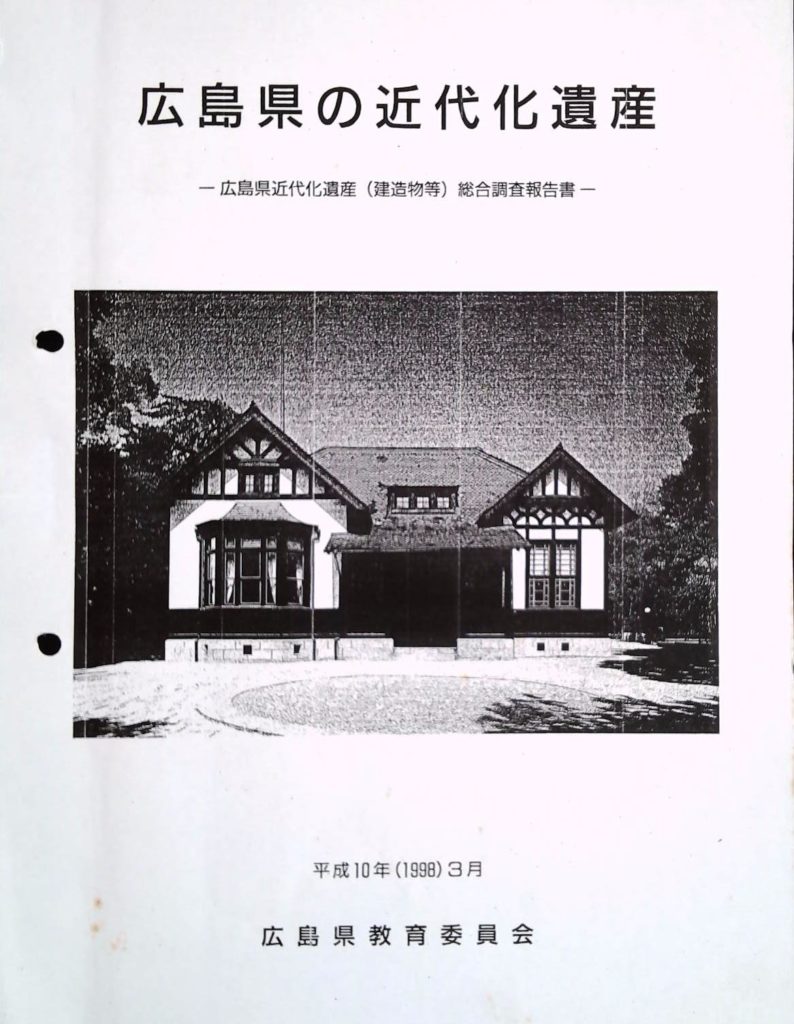
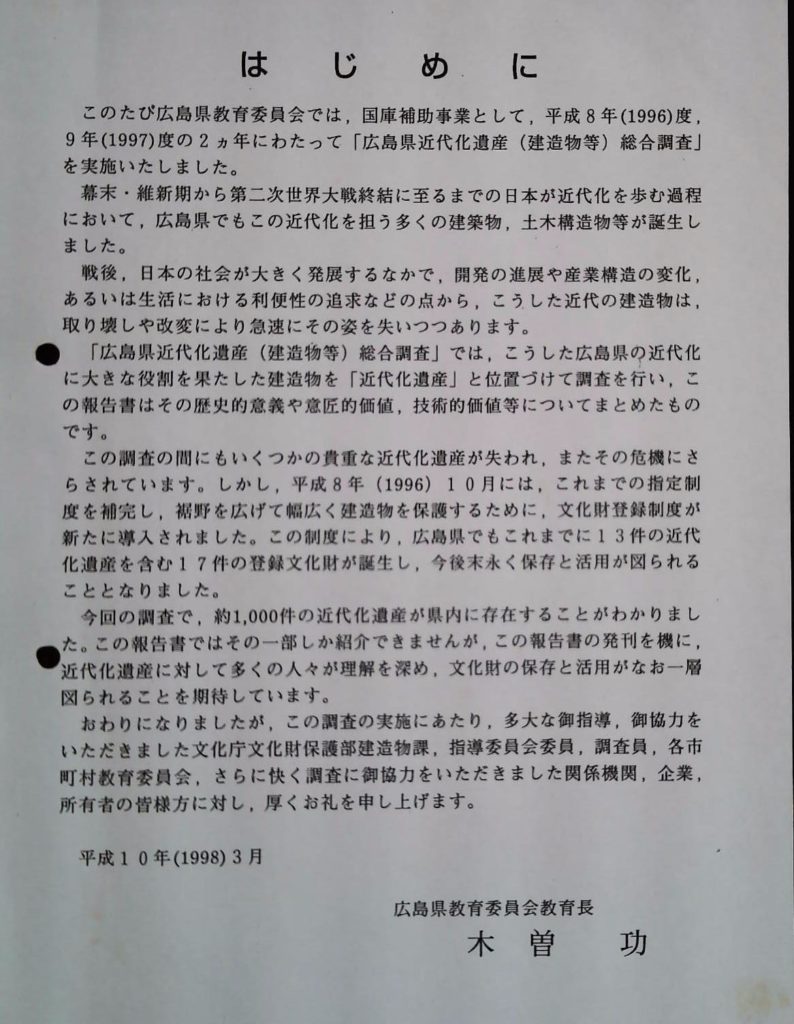
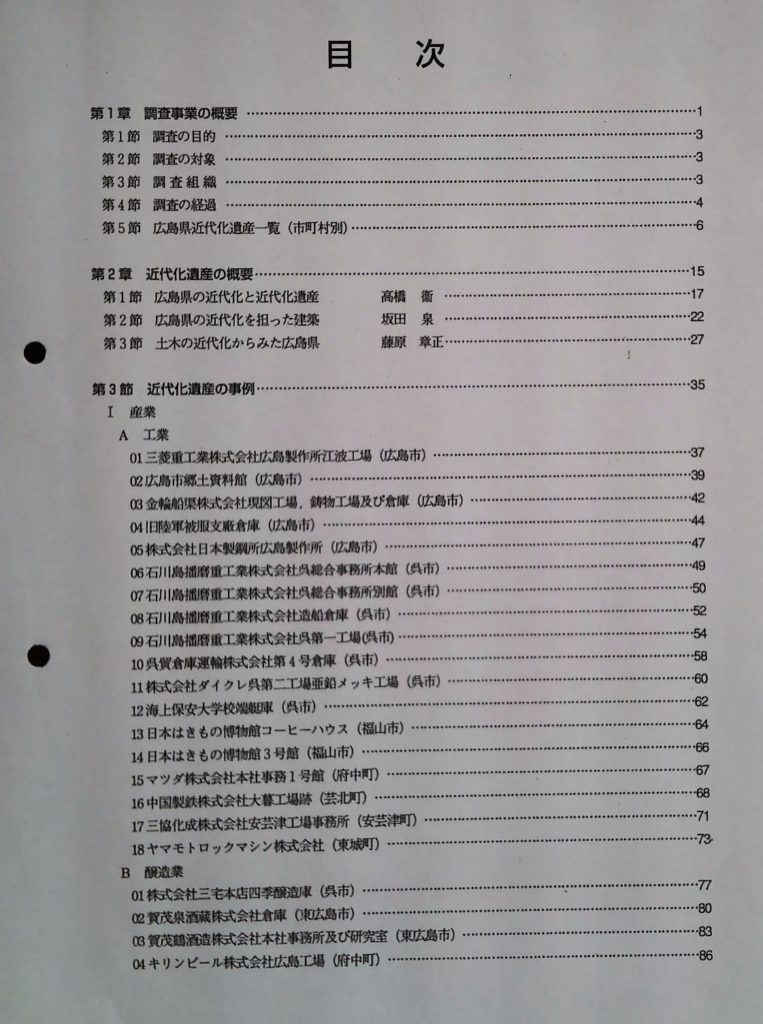
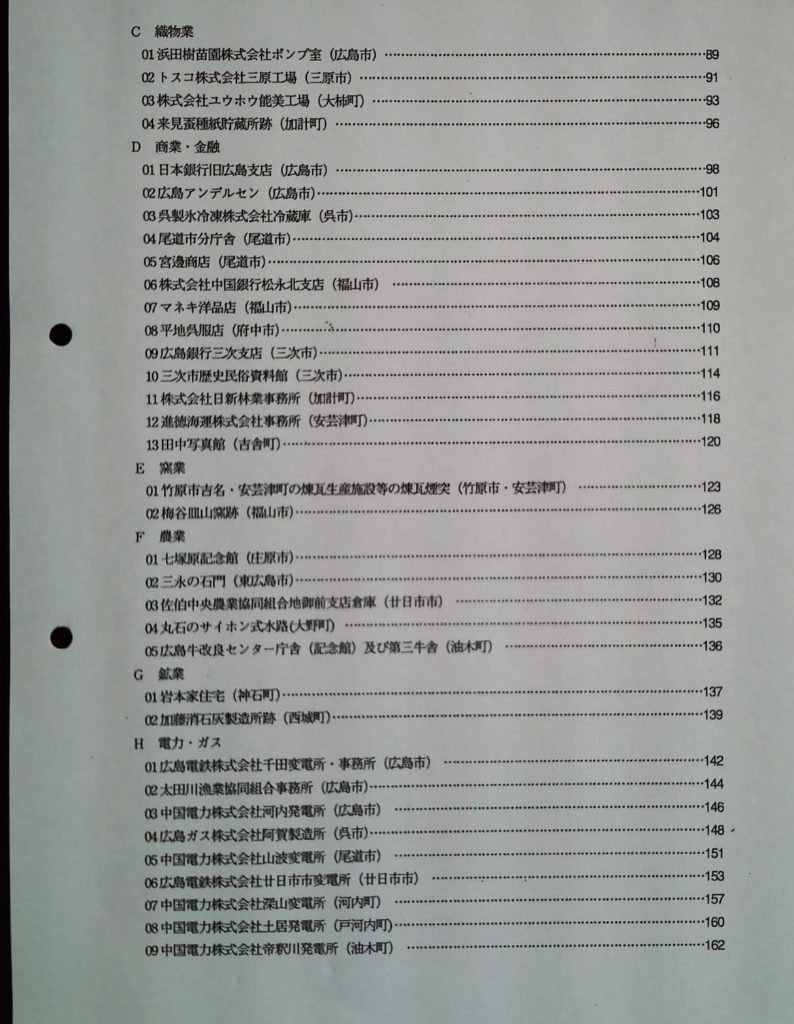
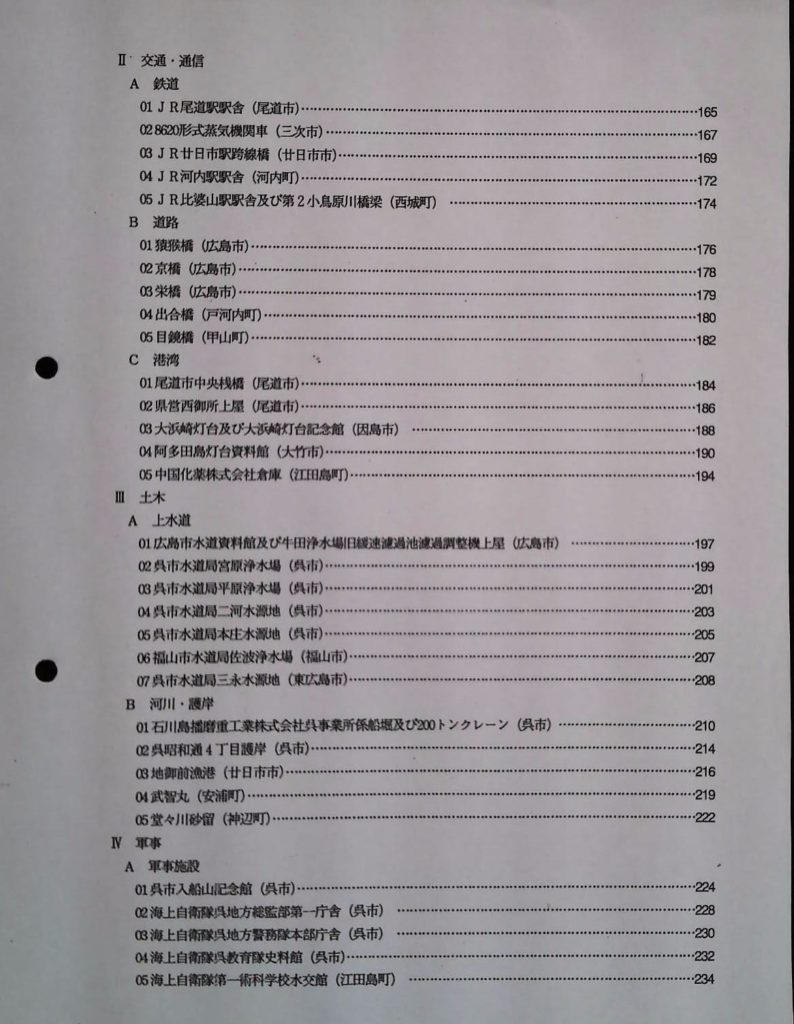
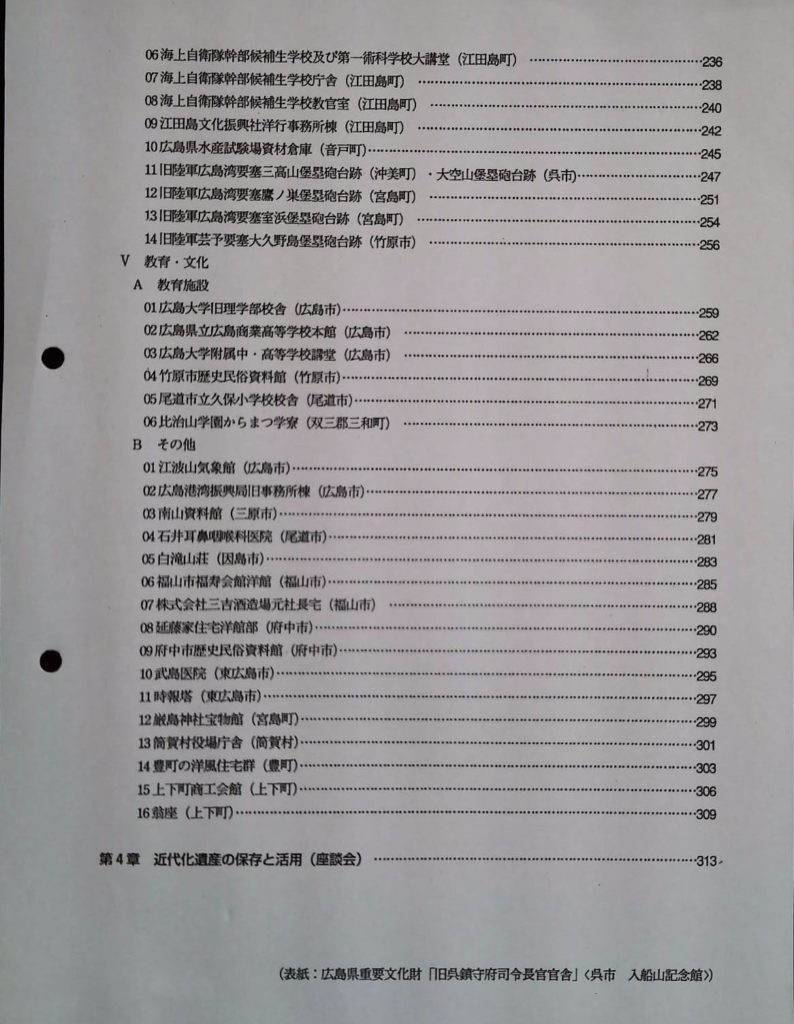
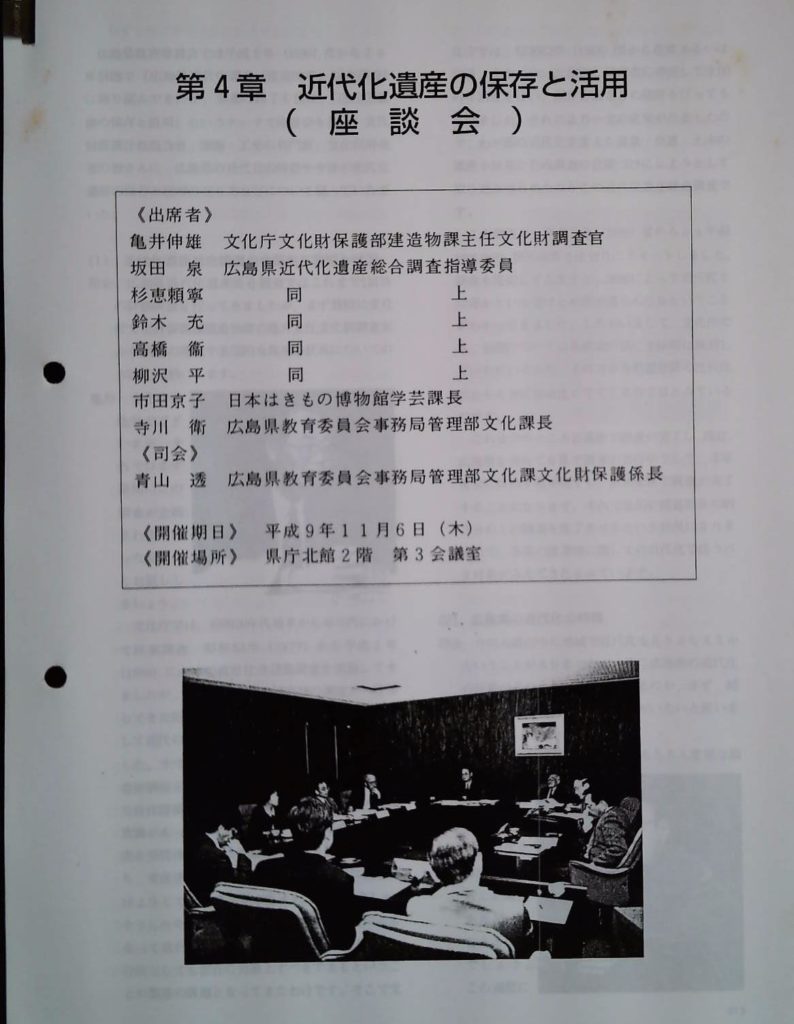
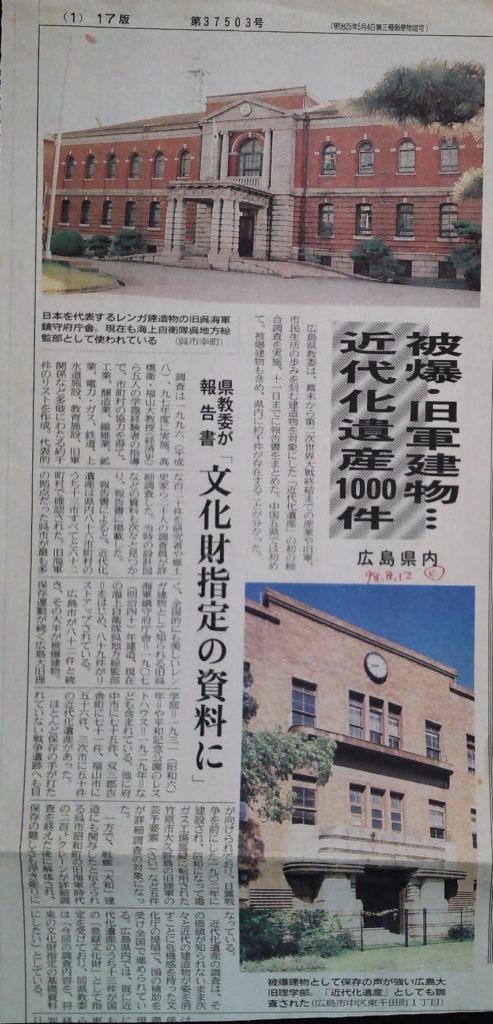
『広島県の近代化遺産―広島県近代化遺産(建造物等)総合調査報告書』(広島県教育委員会、1998.3)
 |
 |
 |
 |
 |
 |
 |
 |
止
ヒロシマの歴史を残された言葉や資料をもとにたどるサイトです。

『広島県の近代化遺産―広島県近代化遺産(建造物等)総合調査報告書』(広島県教育委員会、1998.3)
|
|
|
|
|
|
|
|
止
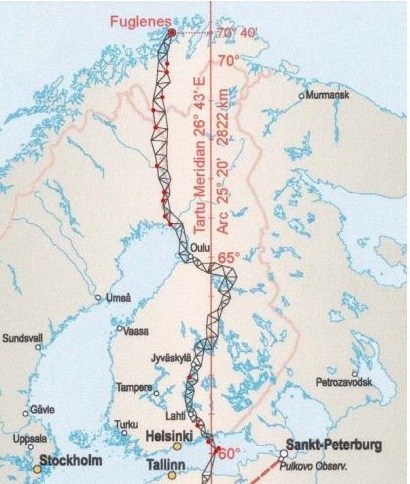
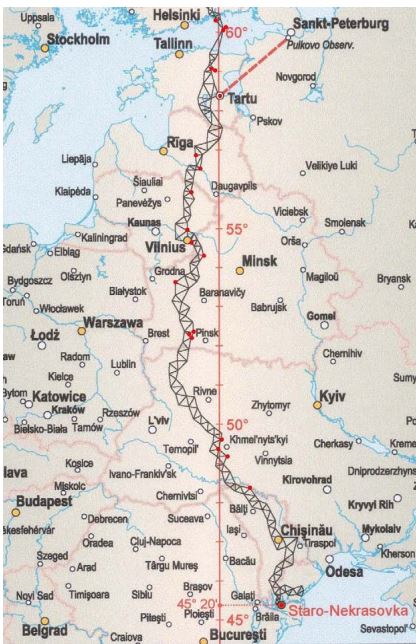
Struve Geodetic Arc – map of inscribed property<作業中>
| Struve Geodetic Arc – UNESCO World Heritage Centre | |
| (Belarus, Estonia, Finland, Latvia, Lithuania, Norway, Republic of Moldova, Russian Federation, Sweden, Ukraine) | |
  |
Norway, Sweden, Finland, Russian Federation, Estonia, Latvia, Lithuania, Belarus, Ukraine Republic of Moldova, |
over
Struve Geodetic Arc – UNESCO World Heritage Centre
Struve Geodetic Ar<作業中>
he Struve Arc is a chain of survey triangulations stretching from Hammerfest in Norway to the Black Sea, through 10 countries and over 2,820 km. These are points of a survey, carried out between 1816 and 1855 by the astronomer Friedrich Georg Wilhelm Struve, which represented the first accurate measuring of a long segment of a meridian. This helped to establish the exact size and shape of the planet and marked an important step in the development of earth sciences and topographic mapping. It is an extraordinary example of scientific collaboration among scientists from different countries, and of collaboration between monarchs for a scientific cause. The original arc consisted of 258 main triangles with 265 main station points. The listed site includes 34 of the original station points, with different markings, i.e. a drilled hole in rock, iron cross, cairns, or built obelisks.
Brief synthesis
The determination of the size and shape of the world was one of the most important problems of natural philosophy since at least the 4th century B.C. The development, in the 16th century, of a measurement system called “triangulation” improved the ability to determine the size and shape of the world. In this system, long chains of triangles were measured, creating arcs that stretched along hundreds and thousands of kilometres.
The Struve Geodetic Arc is a chain of survey triangulations stretching from Hammerfest in Norway to the Black Sea, through ten countries and over 2,820 km. These are points of a survey, carried out between 1816 and 1855 by several scientists (surveyors) under leadership of the astronomer Friedrich Georg Wilhelm Struve, which represented the first accurate measuring of a long segment of a meridian. This helped to establish the exact size and shape of our planet and marked an important step in the development of earth sciences and topographic mapping. It is an extraordinary example of the development of sciences and of collaboration among scientists from different countries, as well as monarchs, for a common scientific cause.
Prior to the Struve Geodetic Arc, an arc of about 2,400 km had been measured in India by Lambton and Everest (completed in 1845), and a shorter arc in Lithuania by Carl Tenner. Struve, who was working at the Dorpat University (currently University of Tartu in Estonia), decided that he would establish an arc following a line of longitude (meridian) passing through the observatory of the university. The new long arc, later to be known as the Struve Geodetic Arc, was eventually created by connecting earlier, shorter arcs to the southern one measured by Tenner, and their extension to the north and south. The arc thus covered a line connecting Fuglenæs, near Hammerfest at the Arctic Ocean, with Staro-Nekrassowka, near Ismail, on the Black Sea shores, along more than 2,800 km. The original arc consisted of 258 main triangles with 265 main station points. The inscribed property includes 34 of the original station points established by Struve and his colleagues between 1816 and 1851 – four points in Norway, four in Sweden, six in Finland, two in Russia, three in Estonia, two in Latvia, three in Lithuania, five in Belarus, one in Moldova and four in Ukraine. Other preserved sites of the Arc are protected nationally.
These marks take different forms: small holes drilled in rock surfaces, and sometimes filled with lead; cross-shaped engraved marks on rock surfaces; solid stone or brick with a marker inset; rock structures (cairns) with a central stone or brick marked by a drilled hole; individual bricks; as well as especially constructed ‘monuments’ to commemorate the point and the arc.
The Struve Geodetic Arc is an extraordinary example of the interchange of human values in the form of international scientific collaboration, as well as an outstanding example of a technological ensemble.
Criterion (ii): The first accurate measuring of a long segment of a meridian, helping in the establishment of the exact size and shape of the world exhibits an important step in the development of earth sciences. It is also an extraordinary example for interchange of human values in the form of scientific collaboration among scientists from different countries. It is at the same time an example for collaboration between monarchs of different powers, for a scientific cause.
Criterion (iv): The Struve Geodetic Arc is undoubtedly an outstanding example of a technological ensemble – presenting the triangulation points of the measuring of the meridian, being the non-movable and non-tangible part of the measuring technology.
Criterion (vi): The measuring of the arc and its results are directly associated with humans wondering about their world, its shape and size. It is linked with Sir Isaac Newton’s theory that the world is not an exact sphere.
Integrity
The inscribed property consists of 34 components, which in total comprise an area of 0.6 ha, with buffer zones amounting to a total of 11 ha. All components of the Struve Geodetic Arc are linked to one chain and a number of the Arc sites belong to national state geodetic reference networks that confer integrity even with the geodetic measurements processed today.
Authenticity
The inscribed components of the property have special characteristics and significance on a technological and scientific level. All points are maintained in their original location and changes are limited to some later constructions marking the locations.
Protection and management requirements
For the inscription of the Struve Geodetic Arc, the ten countries involved collaborated in locating and investigating the sites of historical measurements by using available geodetic observation data and by means of the recent measurement methods as well as satellite geodesy. Upon identification of the component parts, each State Party provided legal protection in accordance with its national frameworks, which in practice entails that some points are covered by laws protecting geodetic points and also by laws for the protection of cultural heritage.
At the national level, each State authority, usually the national mapping authority with the involvement of local administrative authorities, is responsible for the conservation and management of the Struve Geodetic Arc. At the international level, management is the responsibility of the Coordinating Committee, which meets every other year and is run according to management mechanisms agreed upon by all ten countries.
Based on the resolutions of the Coordinating Committee, national representative organizations actively promote the Struve Geodetic Arc via different tasks, such as the producing post stamps and envelopes (completed by Belarus, Estonia, Finland, Latvia, Lithuania, Moldova, Sweden, Ukraine); making promotional movies and educational leaflets, books and articles; preparing exhibitions; translating documentation; restoring geodetic instruments and other materials, and even minting commemorative coins for the Struve Geodetic Arc (Belarus, Moldova).
Ukraine: UNESCO statement 20220224<作成中>
UNPress release
ESCO’s statement on the recent developments in Ukraine
UNESCO is deeply concerned about the ongoing military operations and the escalation of violence in Ukraine. As stated by the UN Secretary-General, such operations are violations of the territorial integrity and sovereignty of Ukraine and are inconsistent with the Charter of the United Nations.
UNESCO calls for respect for international humanitarian law, notably the 1954 Hague Convention for the Protection of Cultural Property in the Event of Armed Conflict and its two (1954 and 1999) Protocols, to ensure the prevention of damage to cultural heritage in all its forms.
This also includes the obligations under the United Nations Security Council Resolution 2222 (2015) on the protection of journalists, media professionals and associated personnel in situations of conflict, to promote free, independent and impartial media as one of the essential foundations of a democratic society, and which can contribute to the protection of civilians.
UNESCO also calls for restraint from attacks on, or harm to, children, teachers, education personnel or schools, and for the right to education to be upheld.
over
Ukraine: UNESCO statement<作成中>
Following the adoption by the United Nations General Assembly of the Resolution on Aggression against Ukraine, and in light of the devastating escalation of violence, UNESCO is deeply concerned by developments in Ukraine and is working to assess damage across its spheres of competence (notably education, culture, heritage and information) and to implement emergency support actions.
The UNGA Resolution reaffirms the paramount importance of the UN Charter and commitment to the sovereignty, independence, unity, and territorial integrity of Ukraine within its internationally recognized borders, and it demands “that the Russian Federation immediately cease its use of force against Ukraine.”
The Director-General, Audrey Azoulay, fully concurs with the opening remarks made by the Secretary-General at the Special Session of the General Assembly, during which he said that “this escalating violence — which is resulting in civilian deaths, including children – is totally unacceptable.”
In addition, she calls for the “protection of Ukrainian cultural heritage, which bears witness to the country’s rich history, and includes its seven World Heritage sites – notably located in Lviv and Kyiv; the cities of Odessa and Kharkiv, members of the UNESCO Creative Cities Network; its national archives, some of which feature in the UNESCO Memory of the World Register; and its sites commemorating the tragedy of the Holocaust.”
“We must safeguard this cultural heritage, as a testimony of the past but also as a vector of peace for the future, which the international community has a duty to protect and preserve for future generations. It is also to protect the future that educational institutions must be considered sanctuaries.”
Consistent with its mandate, UNESCO demands the immediate cessation of attacks on civilian facilities, such as schools, universities, memorial sites, cultural and communication infrastructures, and deplores civilian casualties, including students, teachers, artists, scientists and journalists. These include women and children, girls especially, disproportionately impacted by the conflict and displacement.
In the field of education, Resolution 2601 adopted in 2021 by the UN Security Council states that UN Member States are to “prevent attacks and threats of attacks against schools and ensure the protection of schools and civilians connected with schools, including children and teachers during armed conflict as well as in post-conflict phases”. The General Assembly Resolution of 2 March expresses grave concern at reports of attacks on civilian facilities including schools. In this regard, UNESCO strongly condemns attacks against education facilities, with the damaging of at least seven institutions in the past week, including the attack on 2 March on Karazin Kharkiv National University.
The nationwide closure of schools and education facilities has affected the entire school-aged population — 6 million students between 3 and 17 years old, and more than 1.5 million enrolled in higher education institutions. The escalation of violence hampers the protective role of education, and the impact may be far-reaching including in neighbouring countries.
In the field of culture, UNESCO underlines the obligations of international humanitarian law, notably the 1954 Hague Convention for the Protection of Cultural Property in the Event of Armed Conflict and its two (1954 and 1999) Protocols, to refrain from inflicting damage to cultural property, and condemns all attacks and damage to cultural heritage in all its forms in Ukraine. UNESCO calls also for the full implementation of UN Security Council Resolution 2347.
In this respect, UNESCO is gravely concerned with the damages incurred by the city of Kharkiv, UNESCO Creative City for Music, and the historic centre of Chernihiv, on Ukraine’s World Heritage Tentative List. UNESCO deeply regrets reports of damage to the works of the celebrated Ukrainian artist, Maria Primachenko, with whose anniversary UNESCO was associated in 2009.
UNESCO condemns also the attack that affected the Babyn Yar Holocaust memorial, the site of one of the largest mass shootings of Jews during World War II, and calls for the respect of historic sites, whose value for education and remembrance is irreplaceable.
In order to prevent attacks, UNESCO, in close coordination with the Ukrainian authorities, is working to mark as quickly as possible key historic monuments and sites across Ukraine with the distinctive emblem of the 1954 Hague Convention, an internationally recognised signal for the protection of cultural heritage in the event of armed conflict. In addition, UNESCO has approached the Ukrainian authorities with a view to organising a meeting with museum directors across the country to help them respond to urgent needs for safeguarding museum collections and cultural property. In cooperation with UNITAR/UNOSAT, UNESCO will be monitoring the damages incurred by cultural sites through satellite imagery analysis.
In the field of access to information and freedom of expression, UNESCO recalls its previous statement underlining obligations under UN Security Council Resolution 2222 to protect media professionals and associated personnel. It further notes, as in the same resolution, “media equipment and installations constitute civilian objects, and in this respect shall not be the object of attack or of reprisals, unless they are military objectives”.
In this respect, UNESCO is deeply concerned about reports of the targeting of media infrastructure, including the shelling of Kyiv’s main television tower on 1 March 2022, with multiple reported fatalities, including at least one media worker, as well as cases of violence against journalists and attempts to restrict access to the Internet.
In a conflict situation, free and independent media are critical for ensuring civilians have access to potentially life-saving information and debunking disinformation and rumours.
At the request of a group of Member States, the UNESCO Executive Board will hold a Special Session on 15 March “to examine the impact and consequences of the current situation in Ukraine in all aspects of UNESCO’s mandate”.
over
ウクライナの世界遺産<作業中>
| No. | 登録年 | 遺産名 | 種別 | 備考 |
| 1 | 1990 | キエフ-ペチェールスカヤ大修道院 | 文化遺産 / (i)(ii)(iii)(iv) | |
| 2 | 1998 | リヴィウ歴史地区(1998年) | 文化遺産 /(ii)(v) | |
| 3 | 2005 | シュトゥルーヴェの三角点アーチ観測地点群 | 文化遺産/(ii)(iv)(vi) | |
| 4 | 2007 | カルパチア山脈とヨーロッパ地域の古代及び原生ブナ林 | 自然遺産 / (ix) | |
| 2007、2011, 2017 | ||||
| 5 | 2011 | ブコヴィナ・ダルマティアの主教座施設 | 文化遺産 / (ii)(iii)(iv) | |
| 6 | 2013 | 古代都市「タウリカのヘルソネソス」とそのホーラ | 文化遺産 / (ii)(v) | |
| 7 | 2013 | ポーランド、ウクライナのカルパチア地方の木造教会 | 文化遺産 / (iii)(iv) | |
止
『京大闘争 京大神話の崩壊』(京大新聞社編・京大全共闘協力、三一書房、19690615)
| 頁 | ||
| 005 | 序 | |
| 1933年 京大事件 | ||
| 1943年 学徒出陣 | ||
| 1945年 敗戦―大学再建 | ||
| 1951年 天皇事件 | ||
| 1955年 大学自治の後退―第2次京大事件 | ||
| 1960年 安保闘争 | ||
| 111 | ||
| 1967年 10・8羽田闘争 | ||
| 山崎博昭「日記」 | ||
| 大江健三郎「山崎君の日記を読んで」(文芸春秋社「持続する志」より引用) | ||
| 1969年 | ||
| 120 | 第1部 京大闘争’69 | |
| 292 | 第2部 原点からの問いかけ | |
| 338 | 第3部 「京大の屍」をこえて | |
| 「大学問題をめぐって」ティーチイン(大学変革委員会 講師:高橋和巳) | ||
| 351 | 学生H:僕は4回生ですが、今現実的に卒業や大学院入試がせまっていて、どうしようか迷っています。現実の問題として入試中止といった事態も起こりかねない時に、先生や闘争を組んでいる諸君は一体どんな展望を持っているのか。卒業や入試をひかえた者のことも考えてほしい。 | |
| 406 | 京大闘争すくらっぷ | |
| 416 | 付表 京大闘争の日誌 | |
止
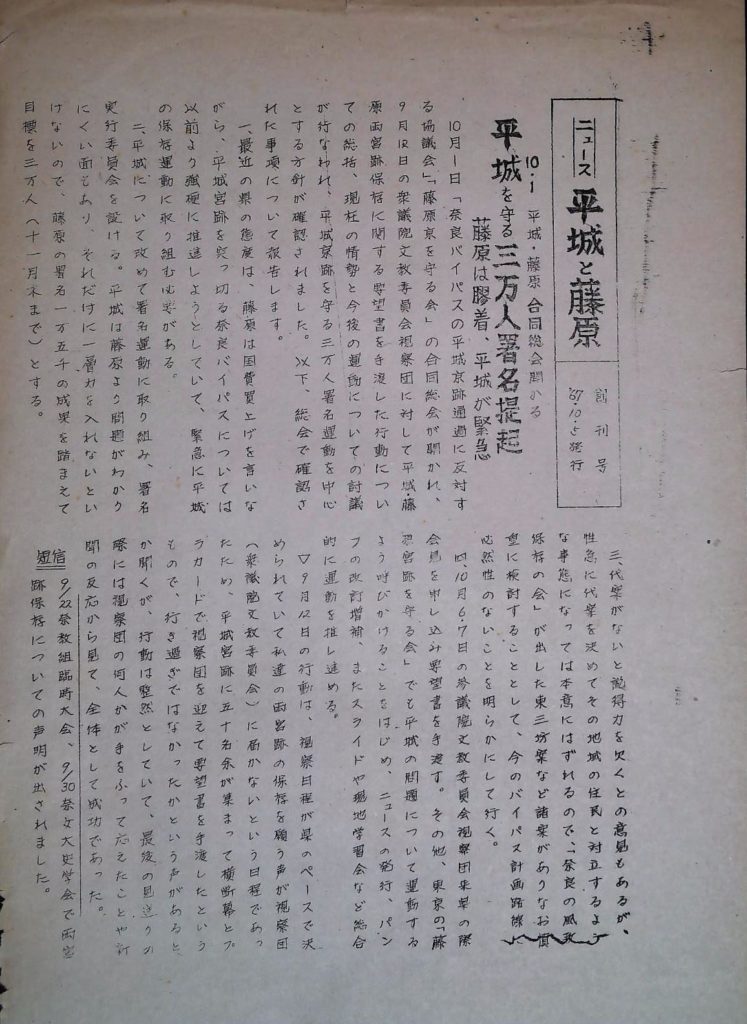
『ニュース 平城と藤原』(奈良バイパスの平城京跡通過に反対する協議会・藤原京を守る会)
| 創刊号(19671005) |
 |
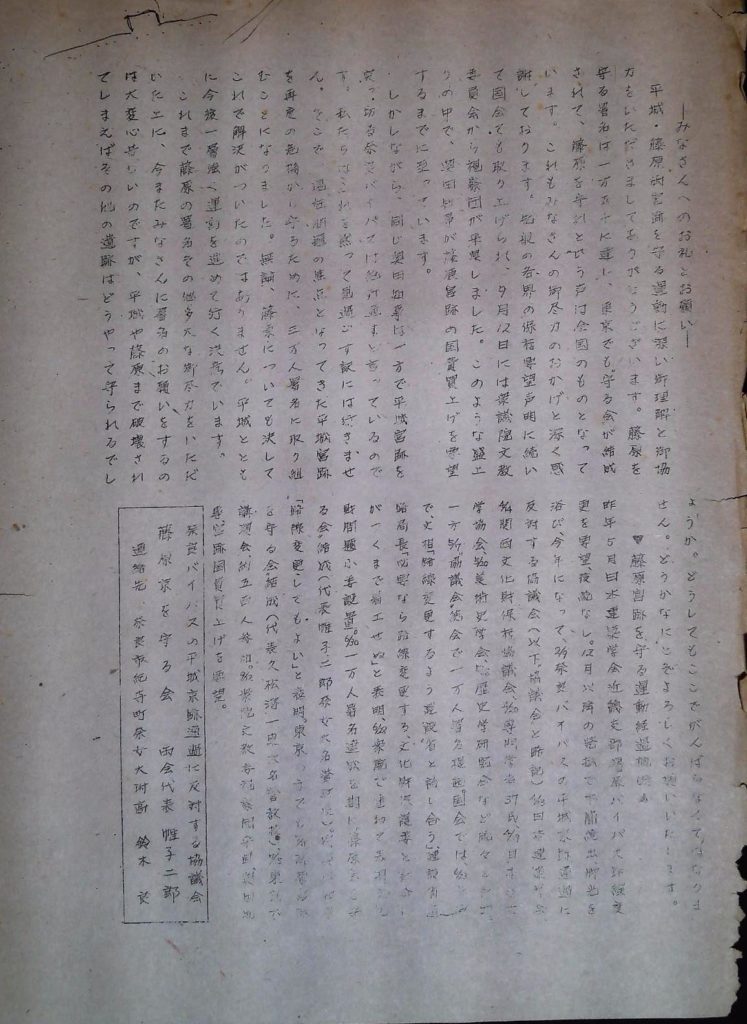 |
| 第2号(19671031) |
 |
止
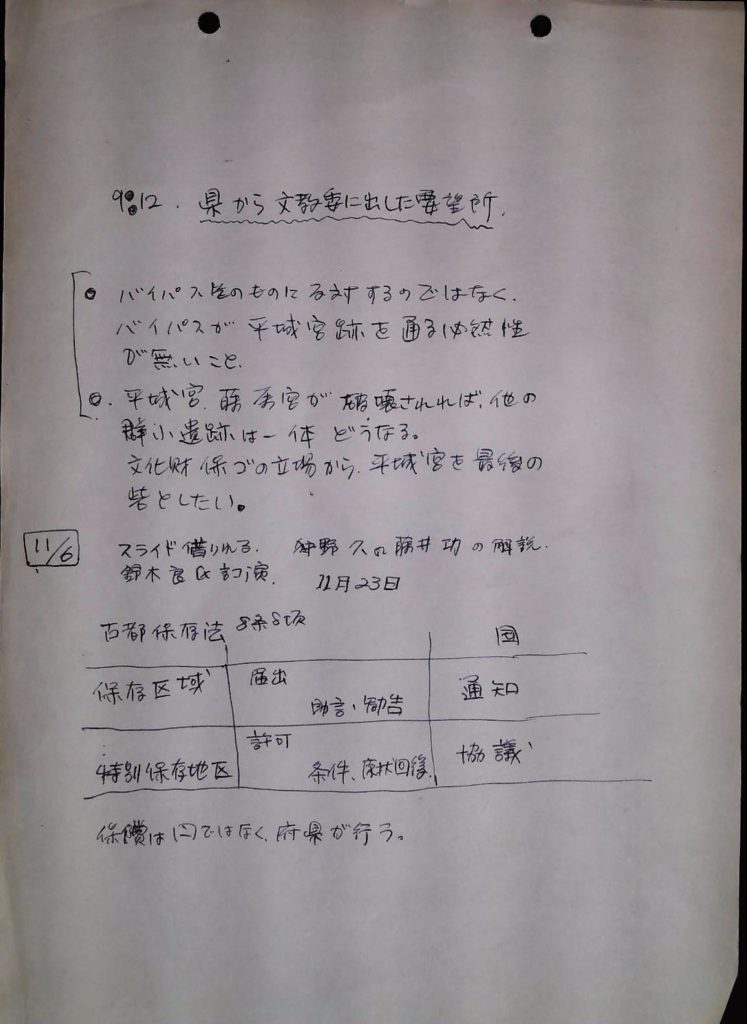
文化財を守る会(宇吹メモ)
| 1967年10月31日 | |
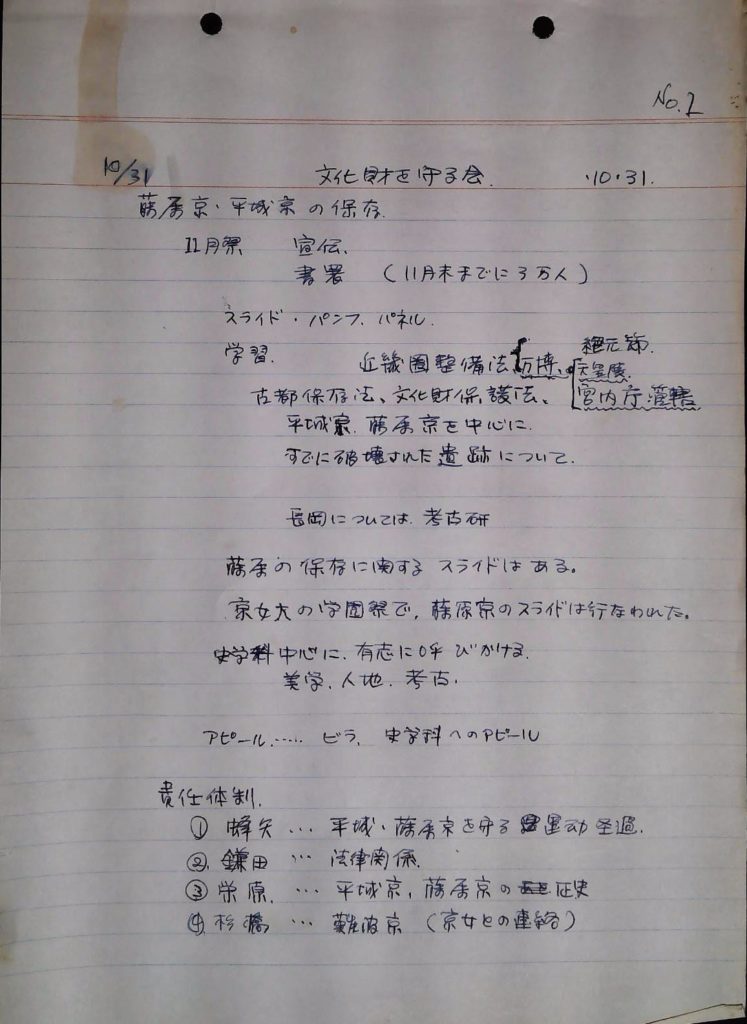 |
|
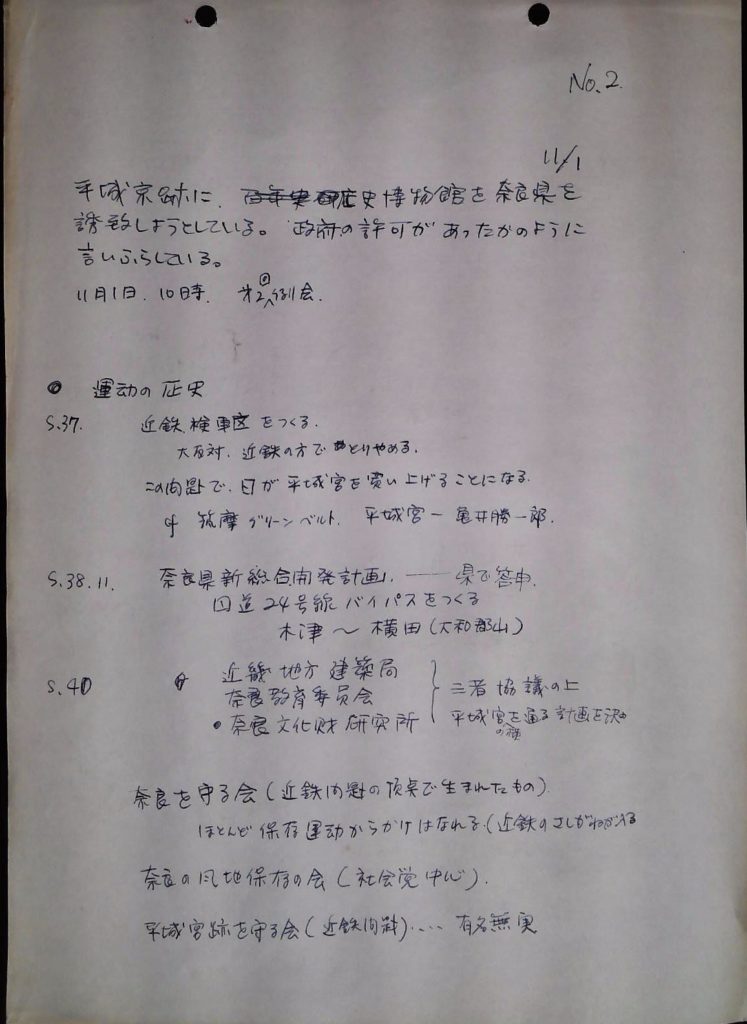 |
|
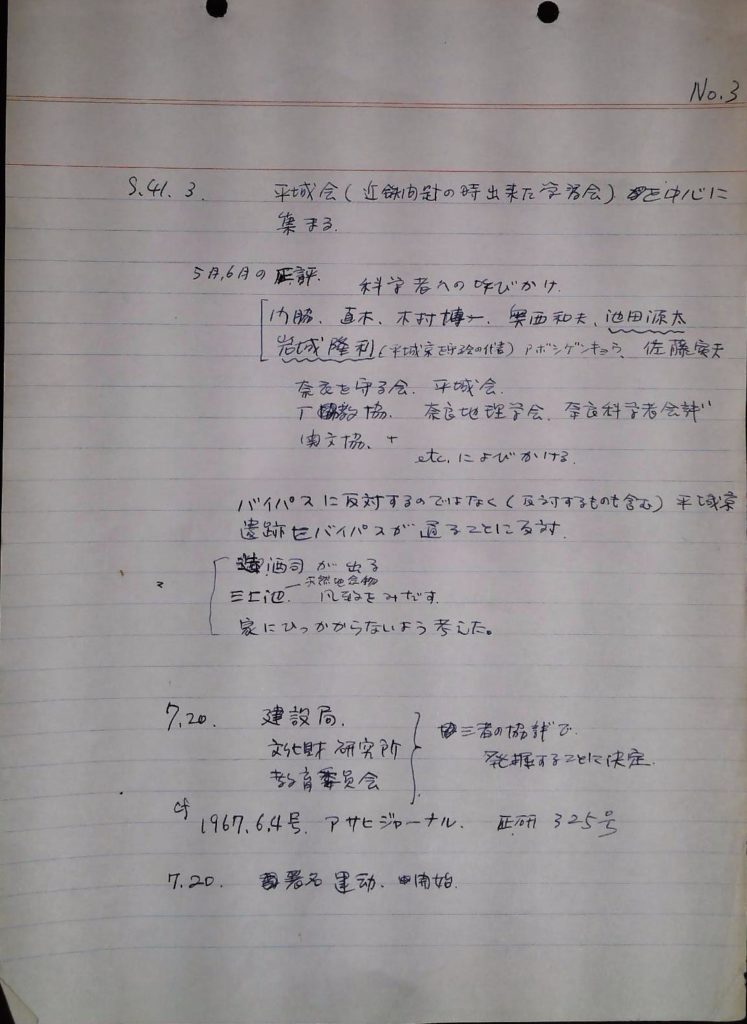 |
|
 |
|
止
文化財を守る会
『文化財保存 その現状と課題』(文化財を守る会、19671119)
| 表紙 |
 |
| 序にかえて |
| 平城・藤原 両宮跡保存運動経過 |
| 難波宮・藤原宮・平城宮・長岡宮 |
| 難波宮址保存について |
| 長岡京について |
| その他関西の遺跡について |
| 埋蔵文化財保護の問題 |
| 近畿圏整備法と広域整備との関連 |
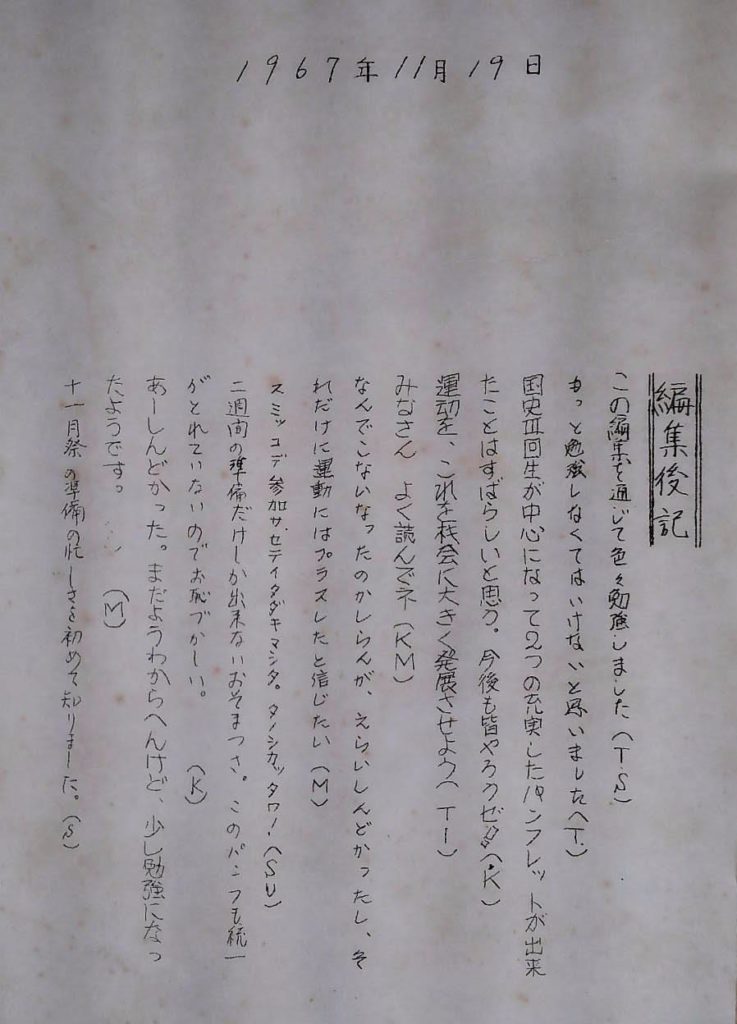 |
| スミッコデ参加サセテイタダキマシタ。タノシカッタワ!(SU) |
止
8・6広島学生平和会議(1954年)
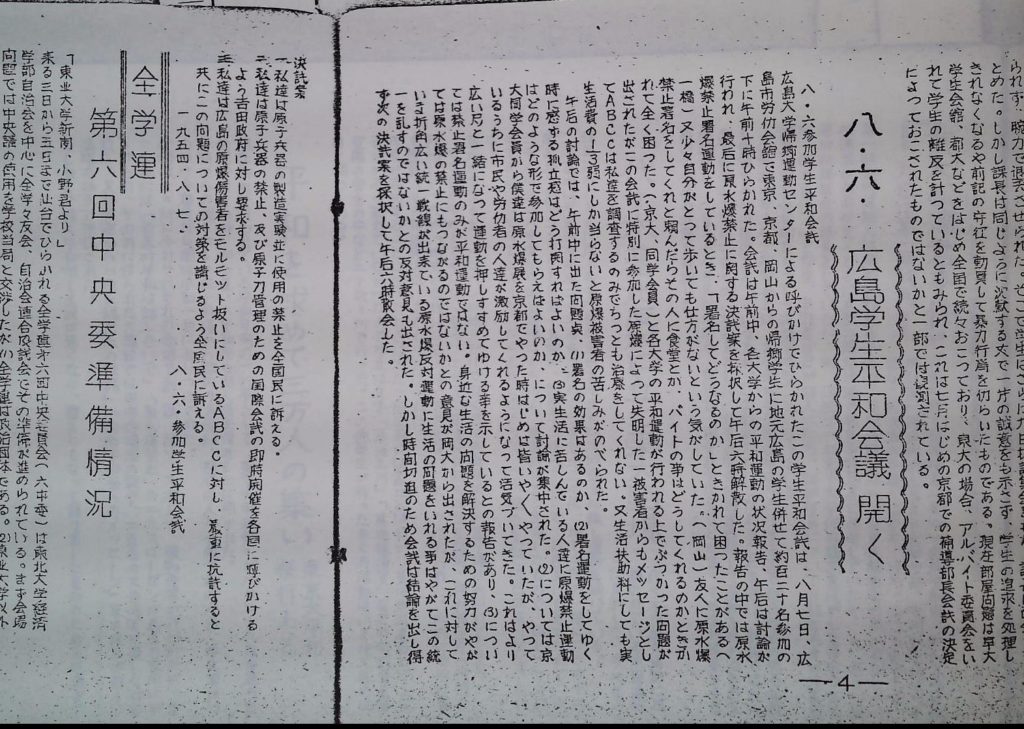 |
| 出典:『連盟通信(全日本学生新聞連盟)180号』(1954.8.15) |
止
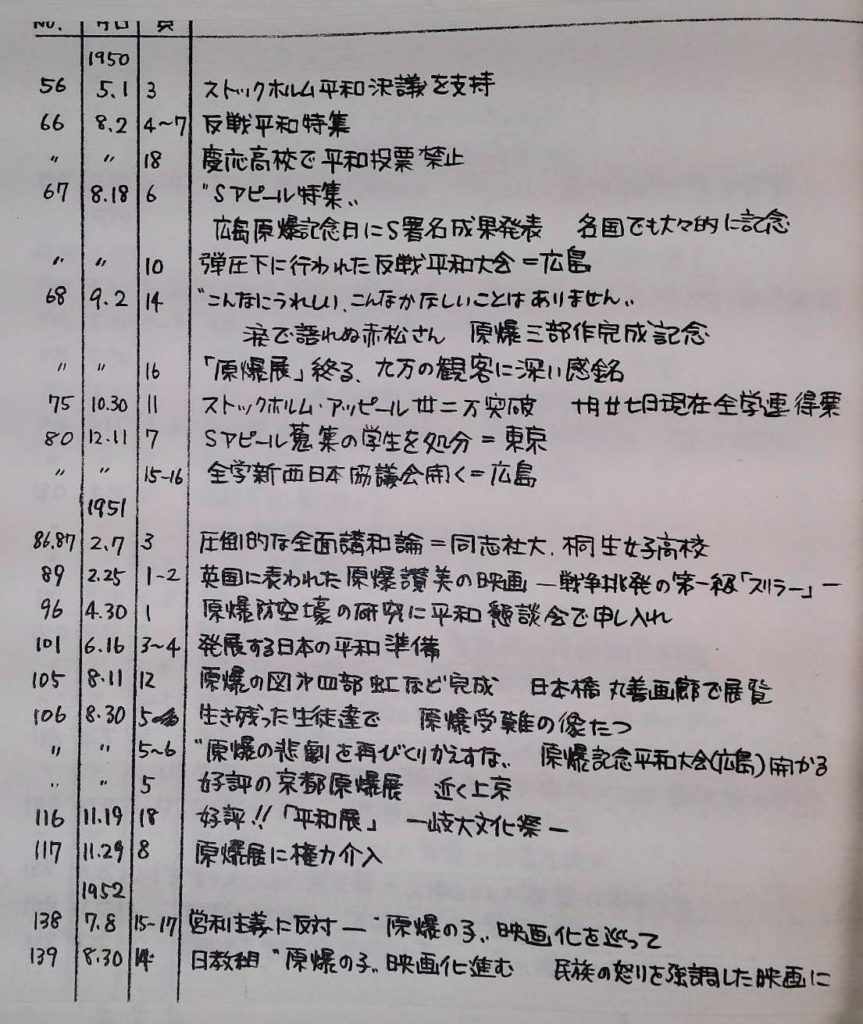
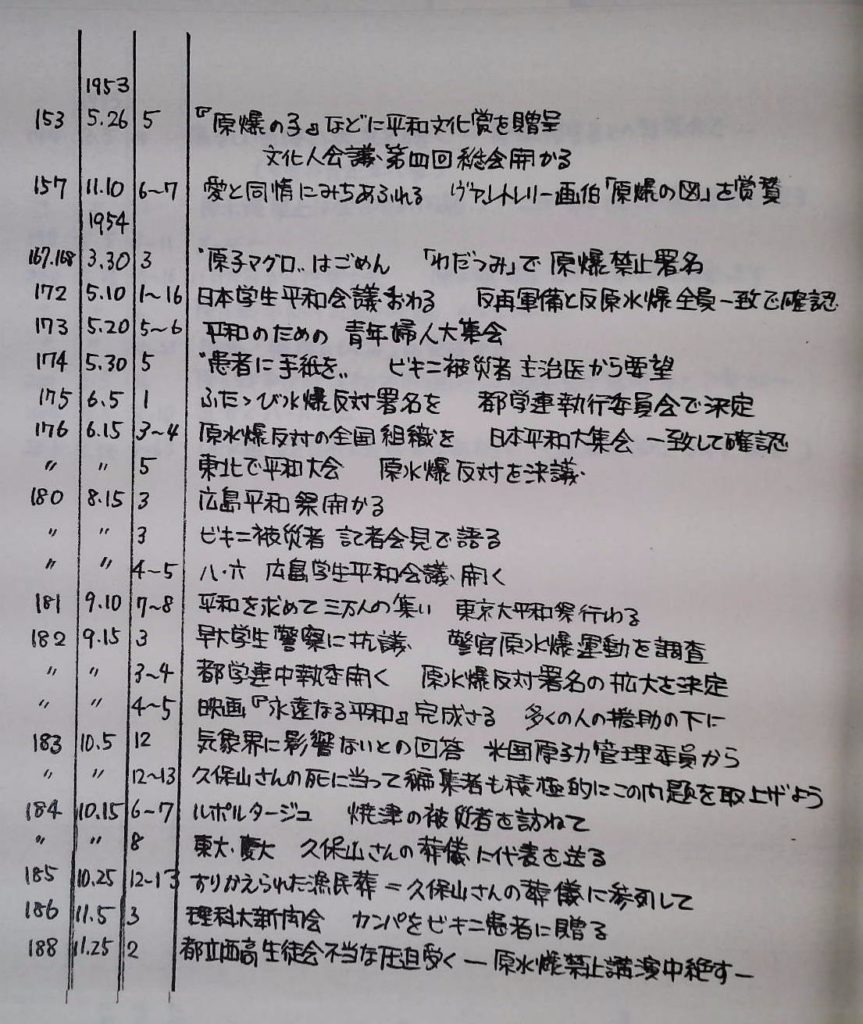
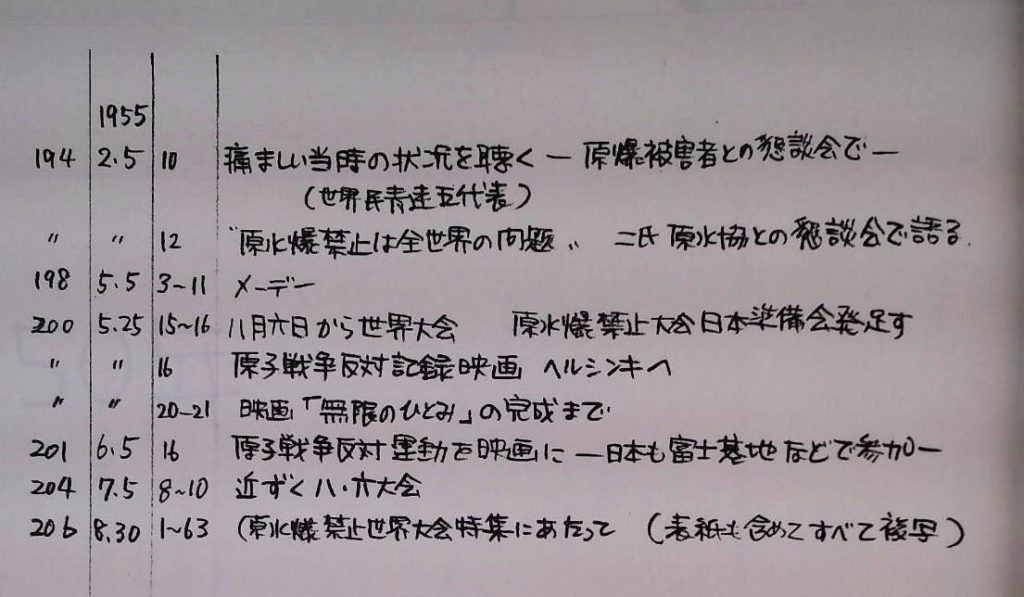
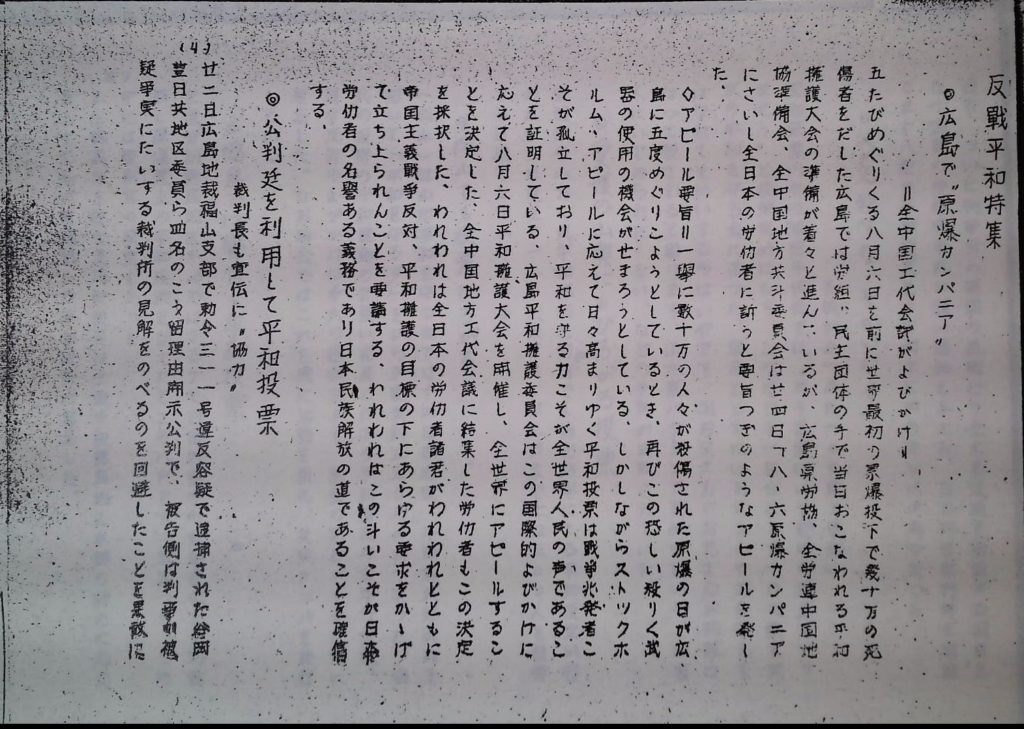
連盟通信(全日本学生新聞連盟)ヒロシマ関係記事
| 号 発行年月日 頁 記事見出し |
 |
 |
 |
 |
| |
止
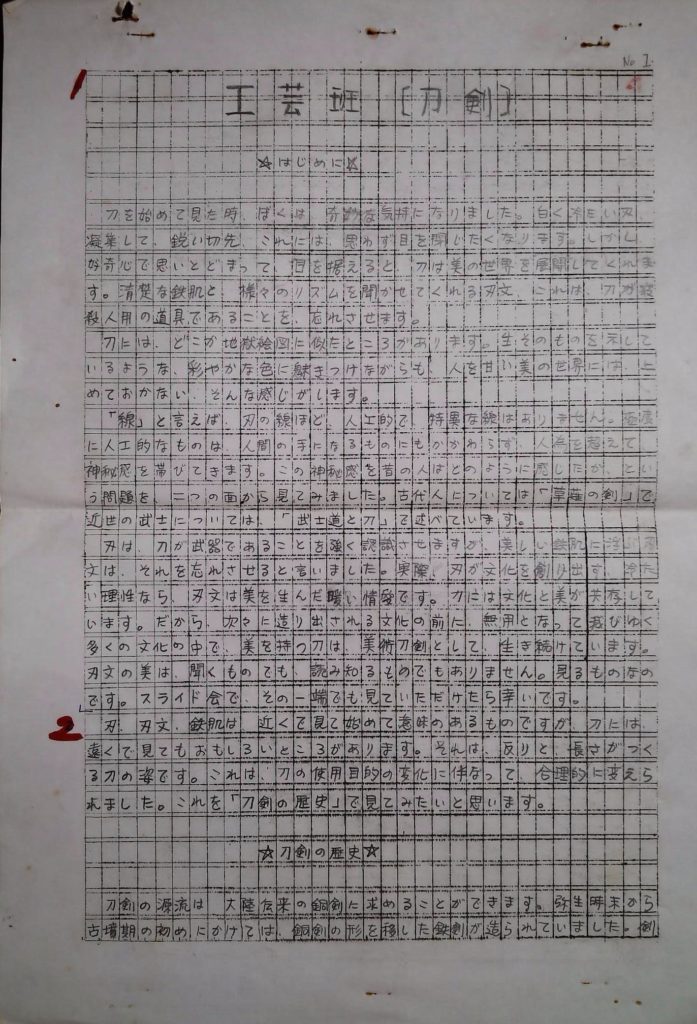
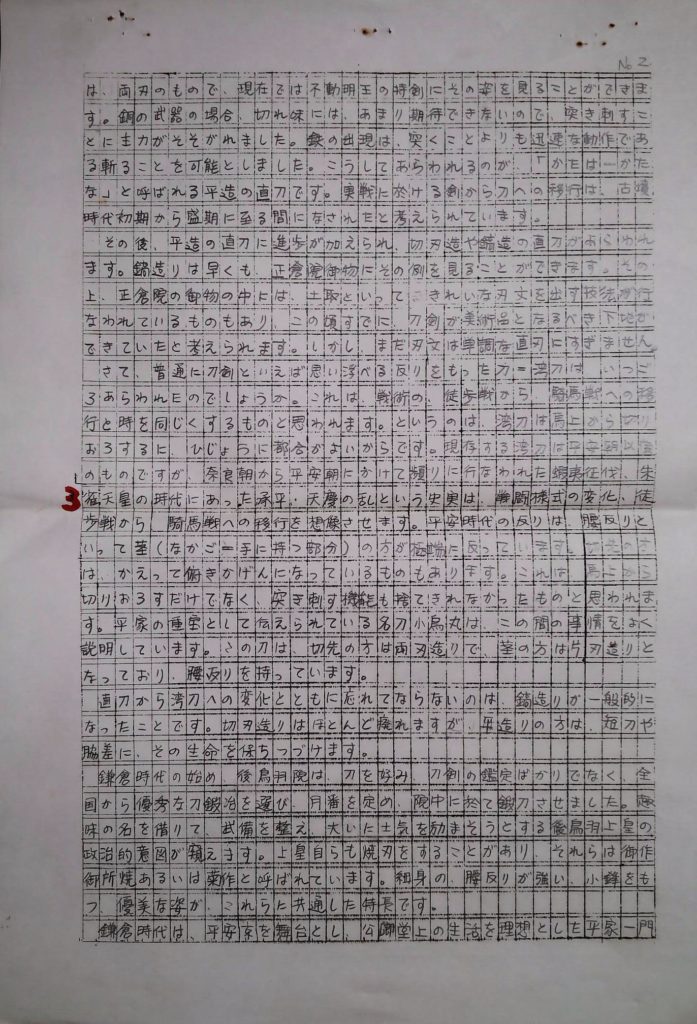
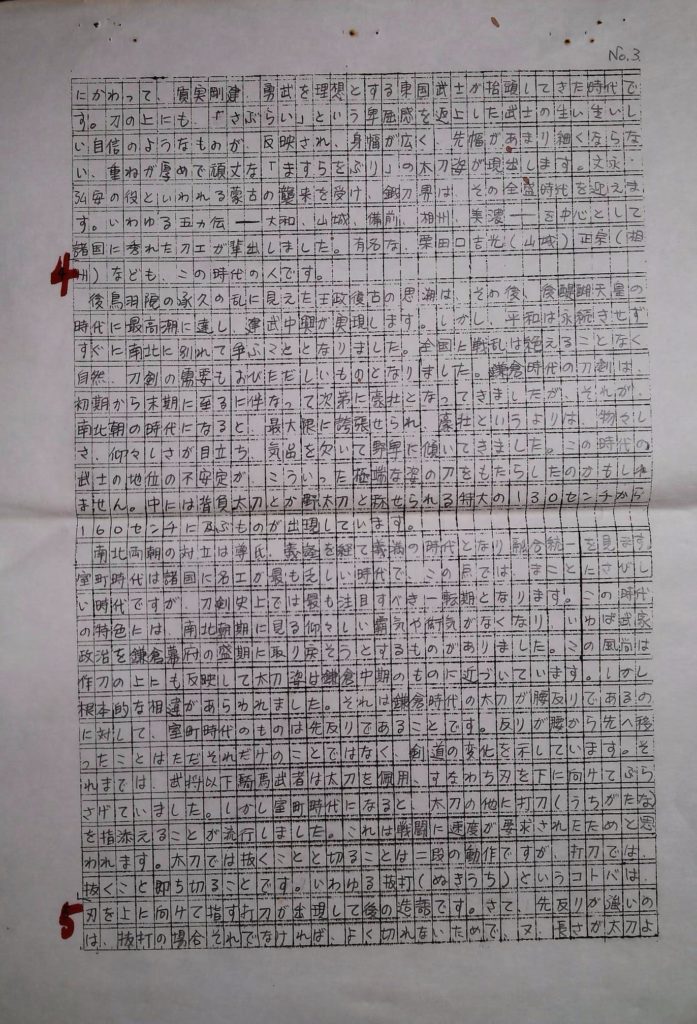
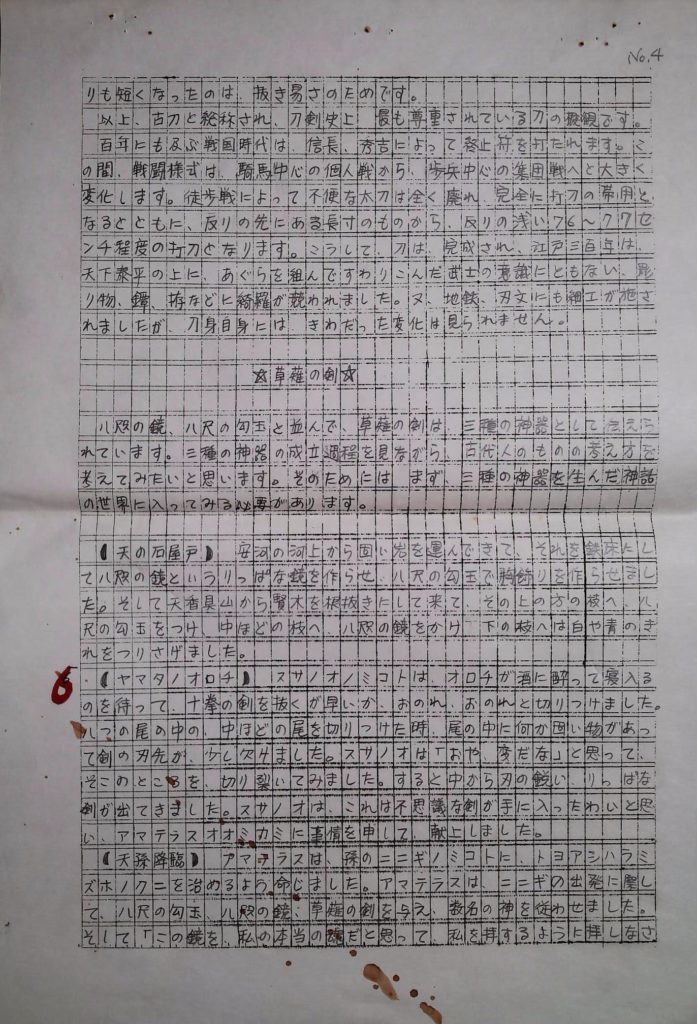
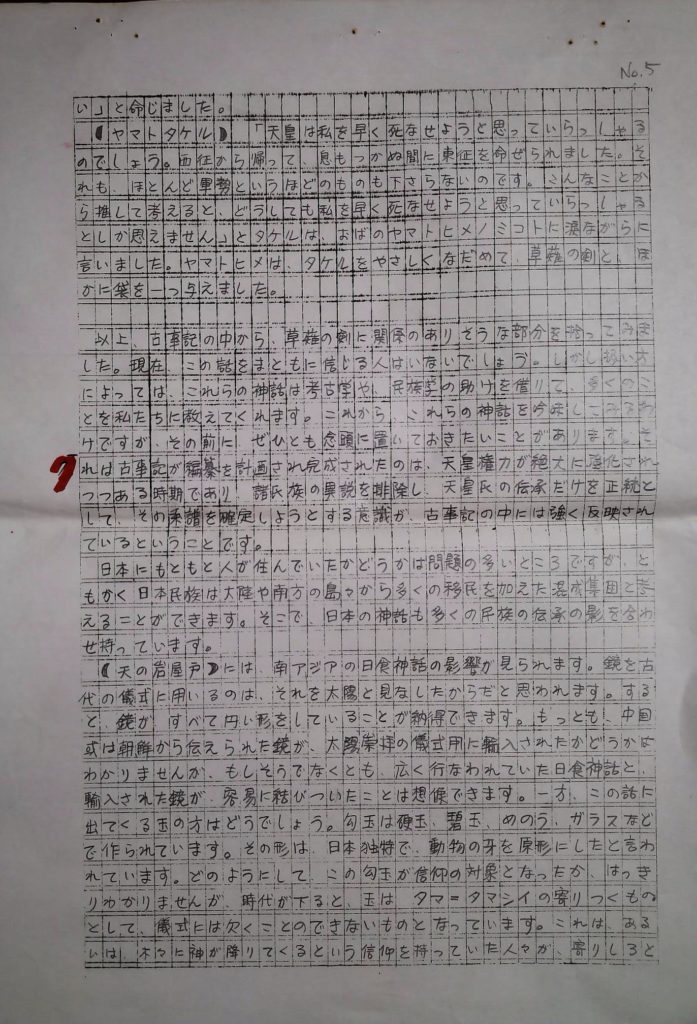
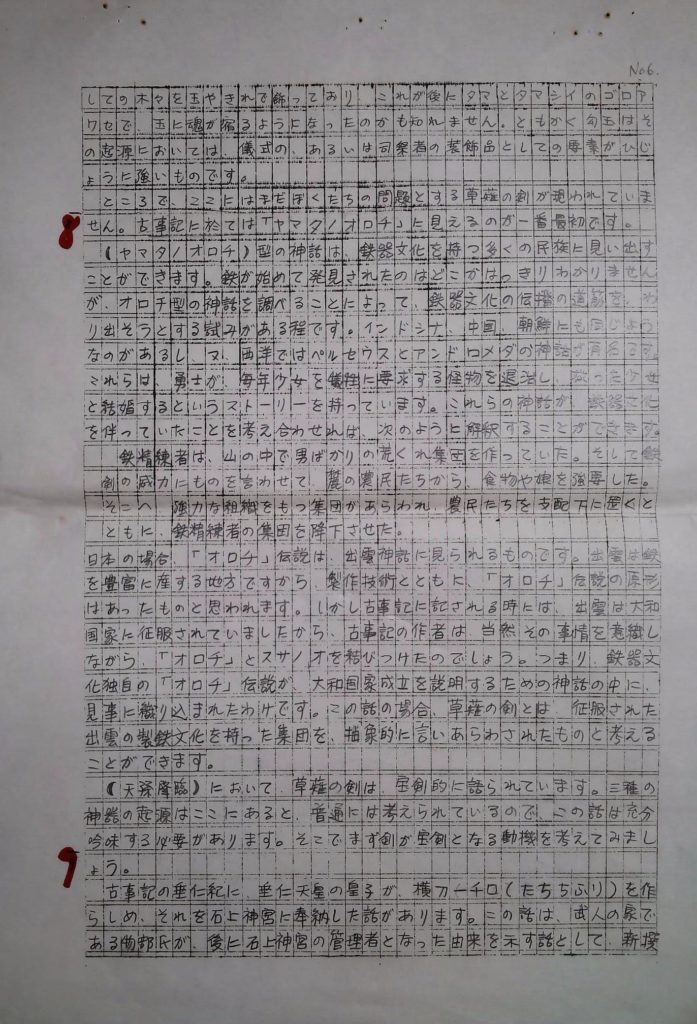
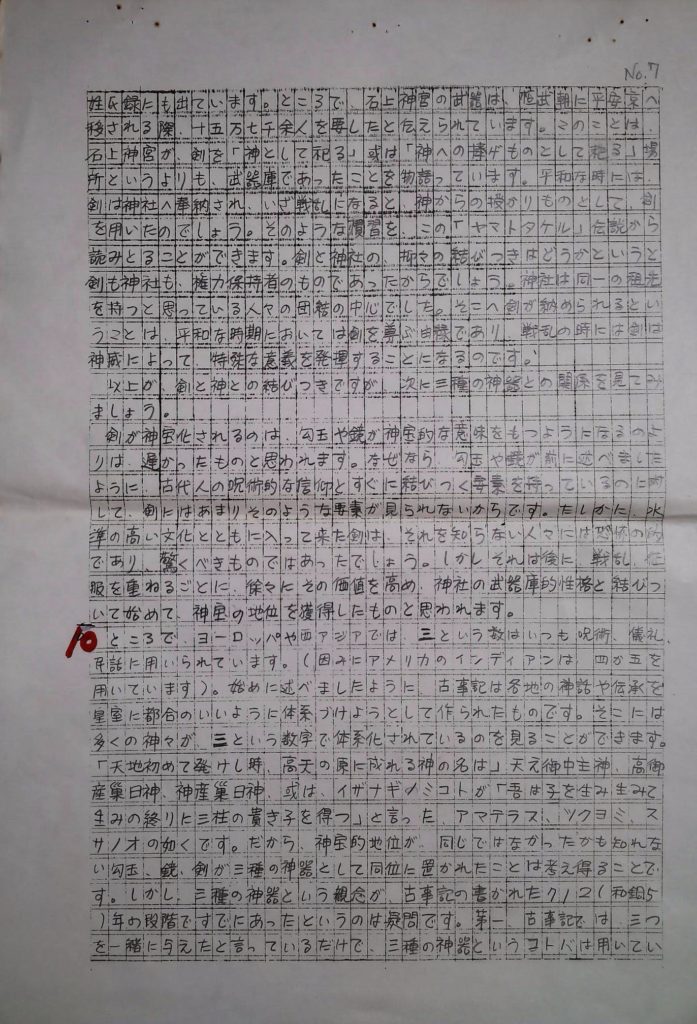
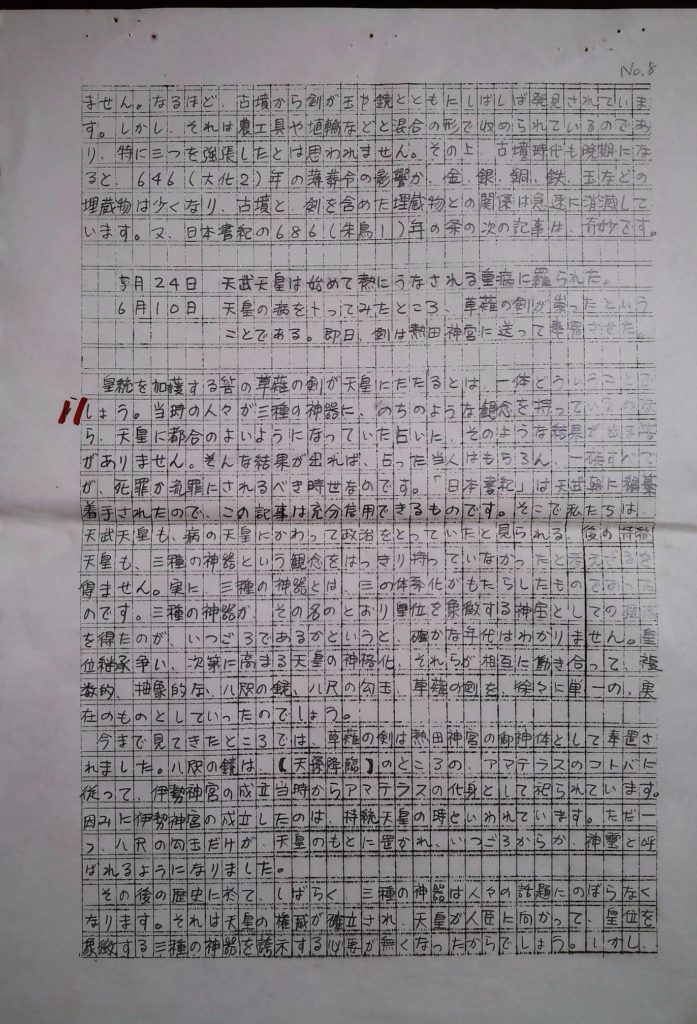
刀剣(工芸班 線の美術 京大11月祭スライド会)記録
 |
 |
 |
 |
 |
 |
 |
 |
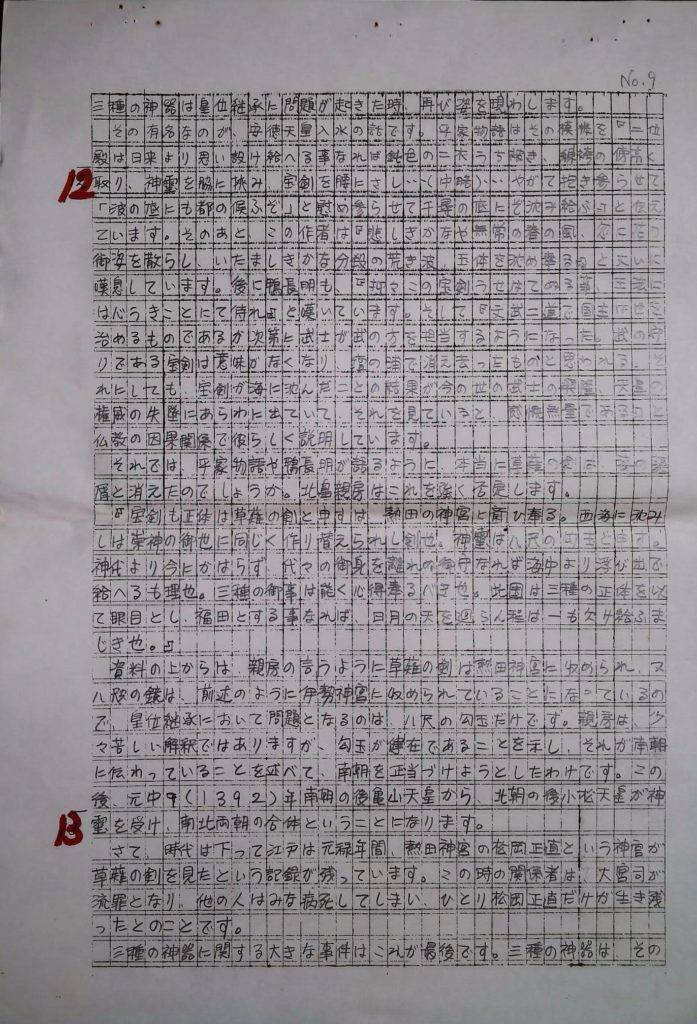 |
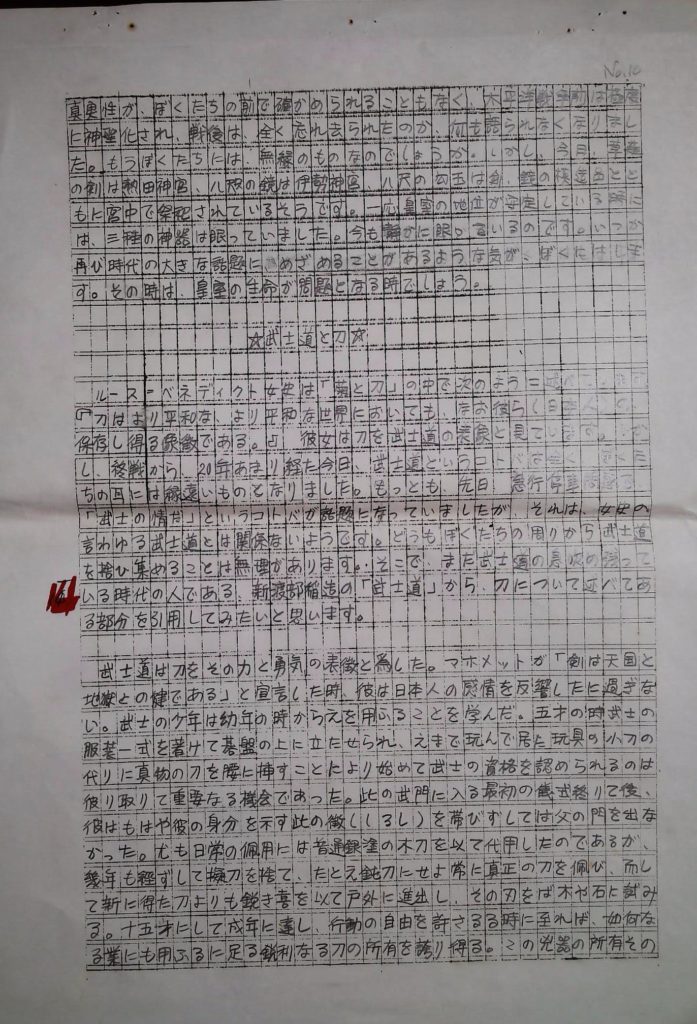 |
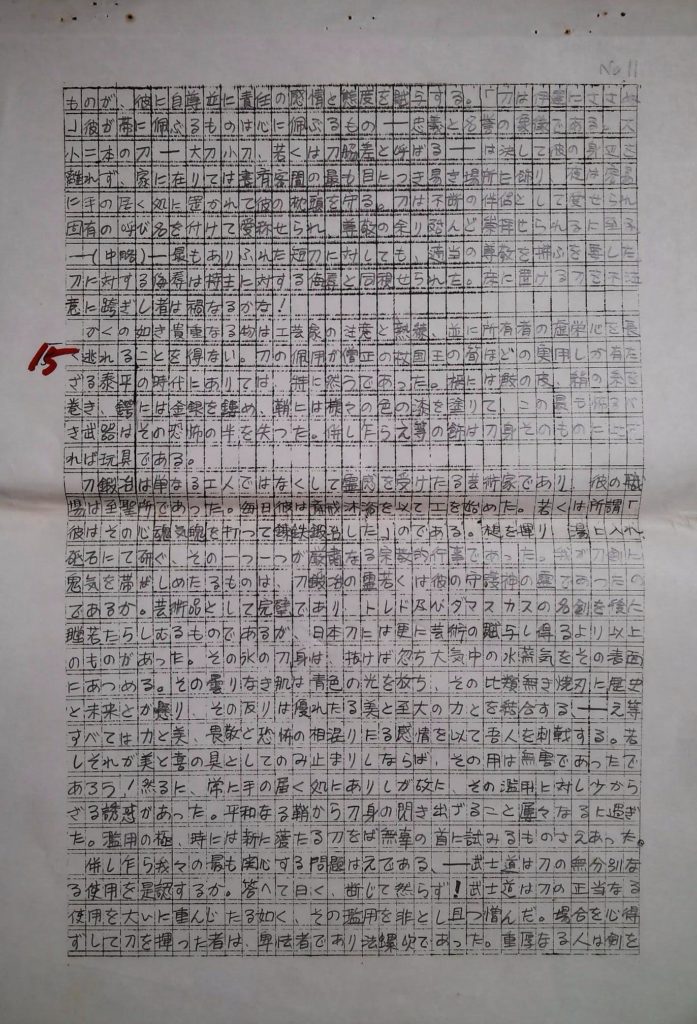 |
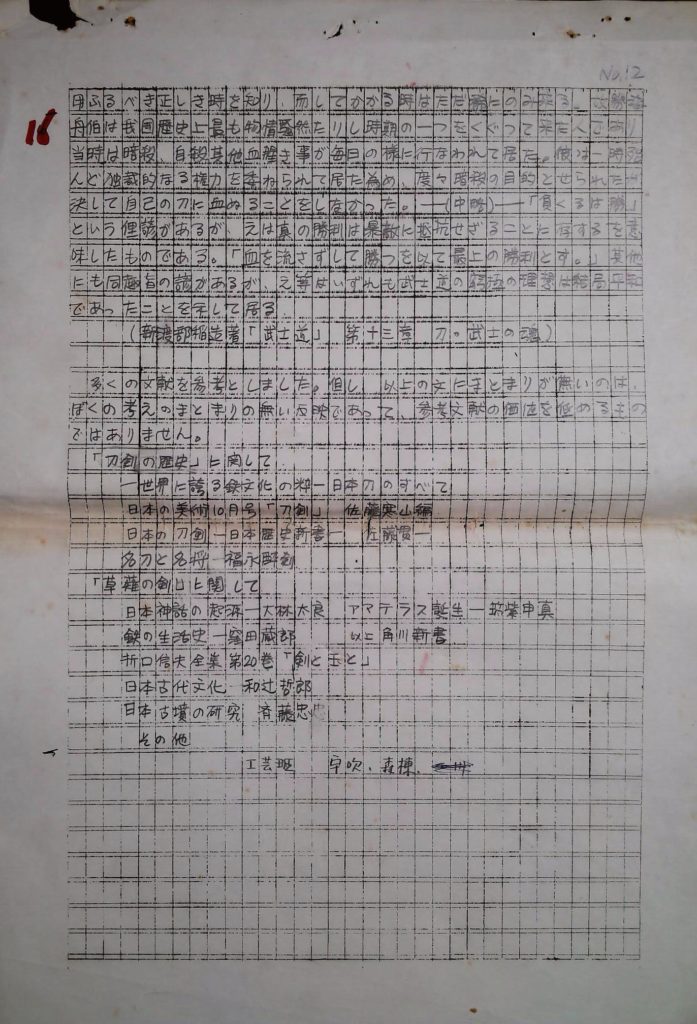 |
止
資料:京都大学美術研究会
| 発行年月日 | 資料名 | 備考 |
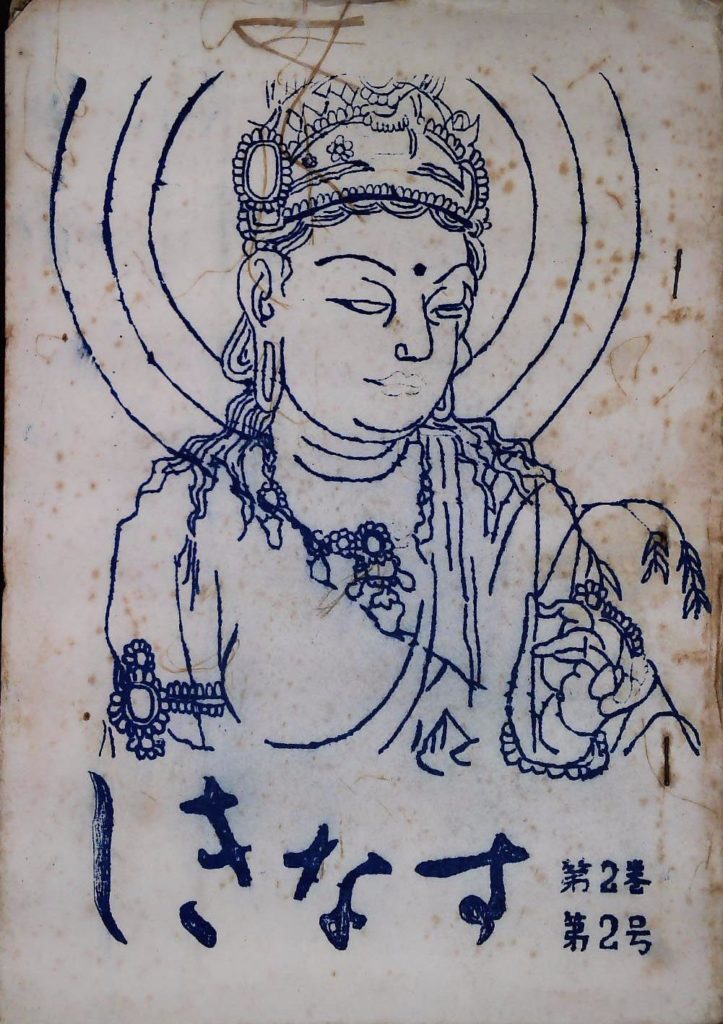
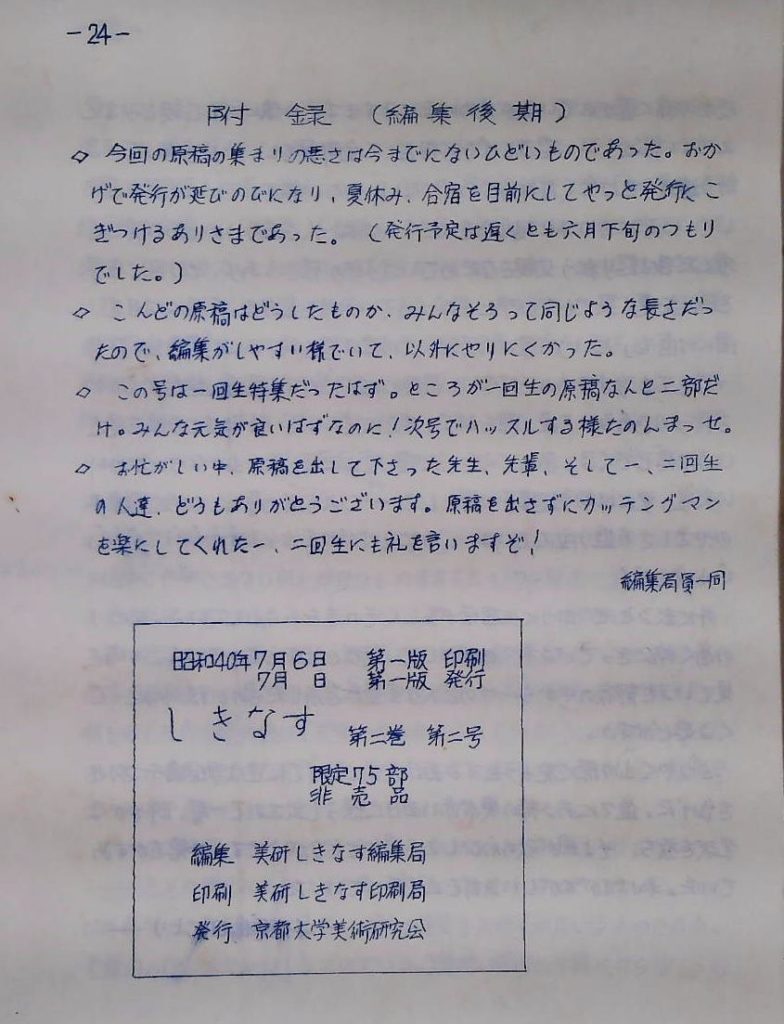
| 196507 | しきなす(会誌)2巻2号 | |
 |
||
 |
||
| 1965 | かまくら 昭和40年度京大美研夏季合宿 | |
| 19651121 | むろまち その美的世界の構成 美研スライド会 65.11.21~22 11月祭参加 | |
| **** | 能面について 1965 11月祭 | |
| 19651211 | しきなす(会誌)2巻3号 室町―その美の究明 | |
| 19651212 | 春日奥山 石仏めぐり 美研12月例会 | |
| 19660228 | しきなす(会誌)3巻1号 | |
| 19660228 | しきなす(会誌)3巻2号 | |
| 19660630 | しきなす(会誌)3巻3号 | |
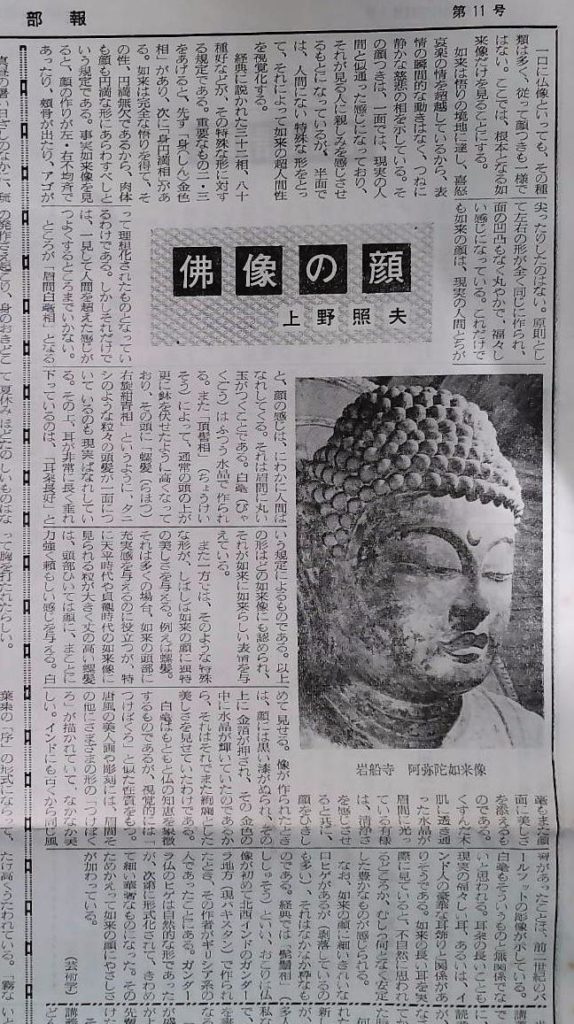
| 19661101 | 上野照夫「仏像の顔」(京大教養部報第11号) | |
|
|
||
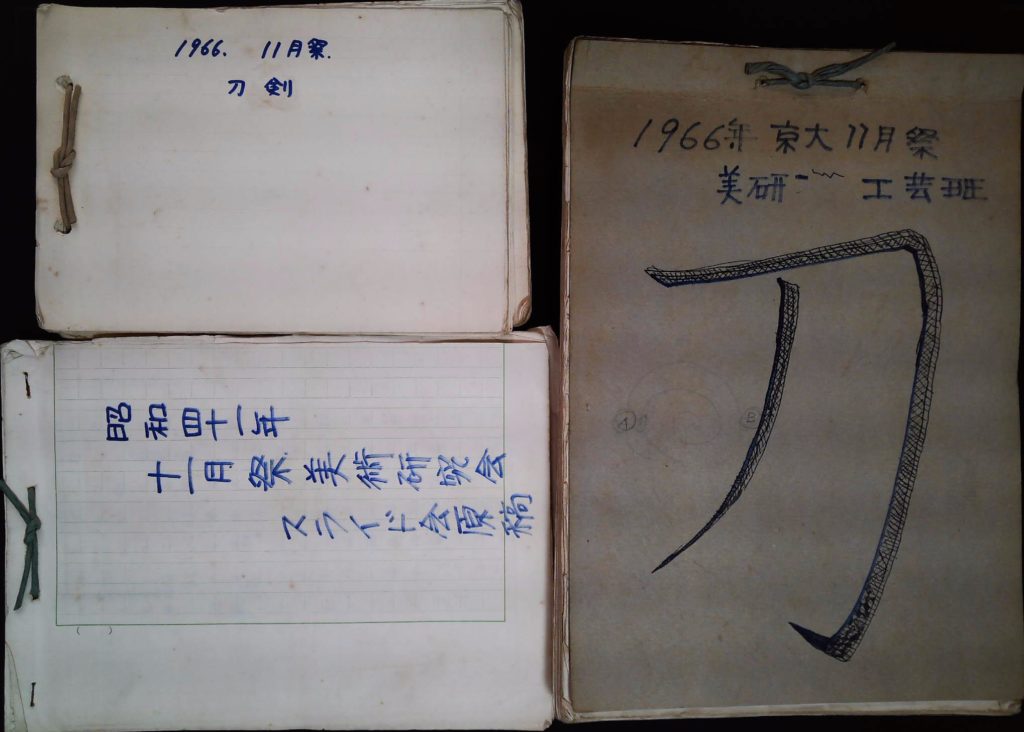
| 196611 | 工芸班(刀剣)準備資料 | |
 |
||
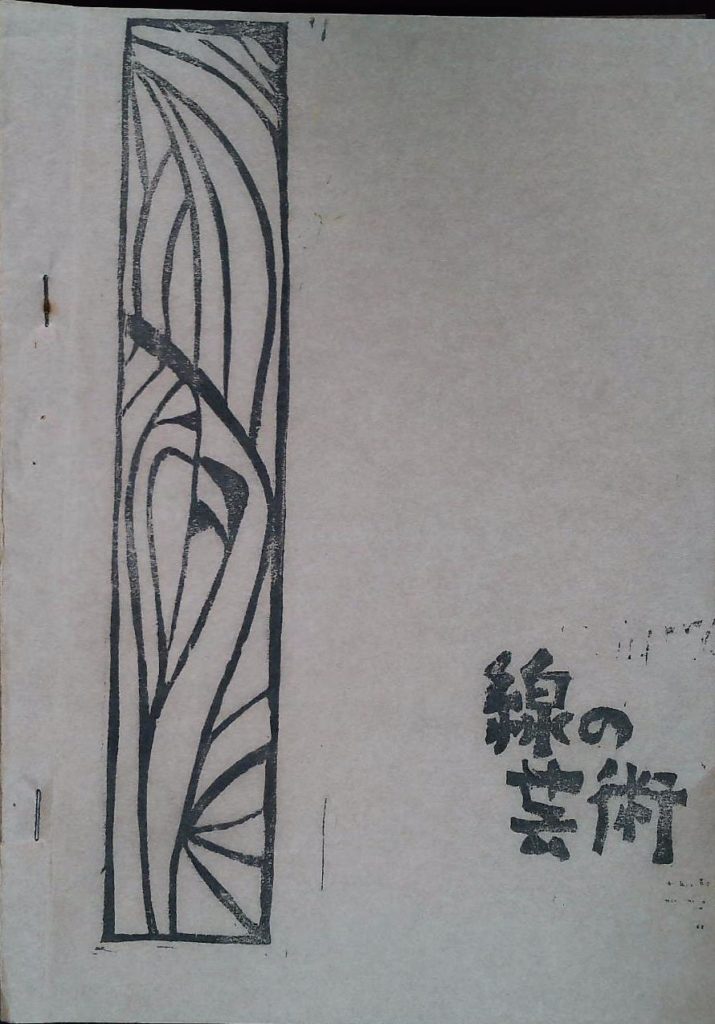
| 19661120 | 線の芸術 しきなす 特別号 限定200部 | |
 |
||
| 19671119 | 京都大学11月祭参加 奈良(スライド会統一テーマ) 67.11.19~20 | |
止
万葉一日旅行(1967年5月21日)
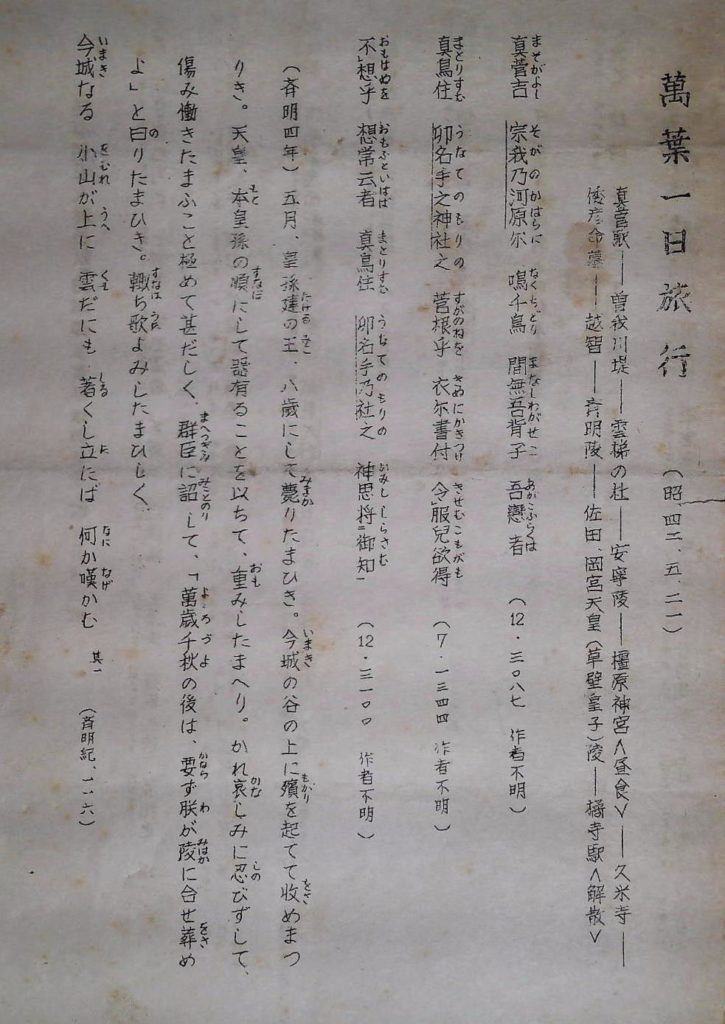 |
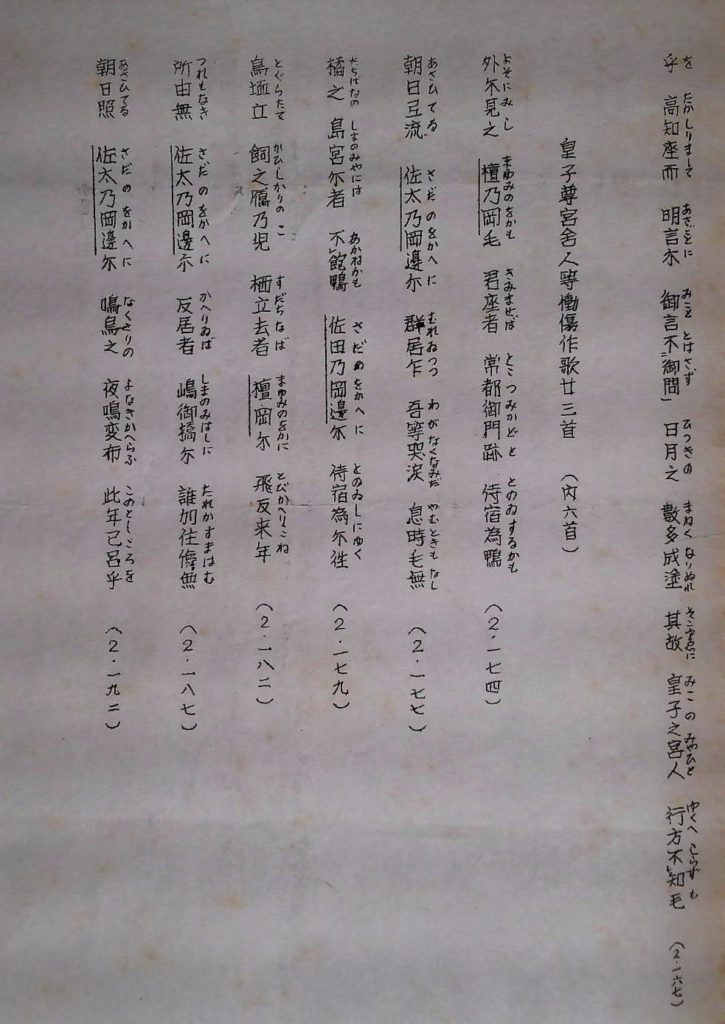 |
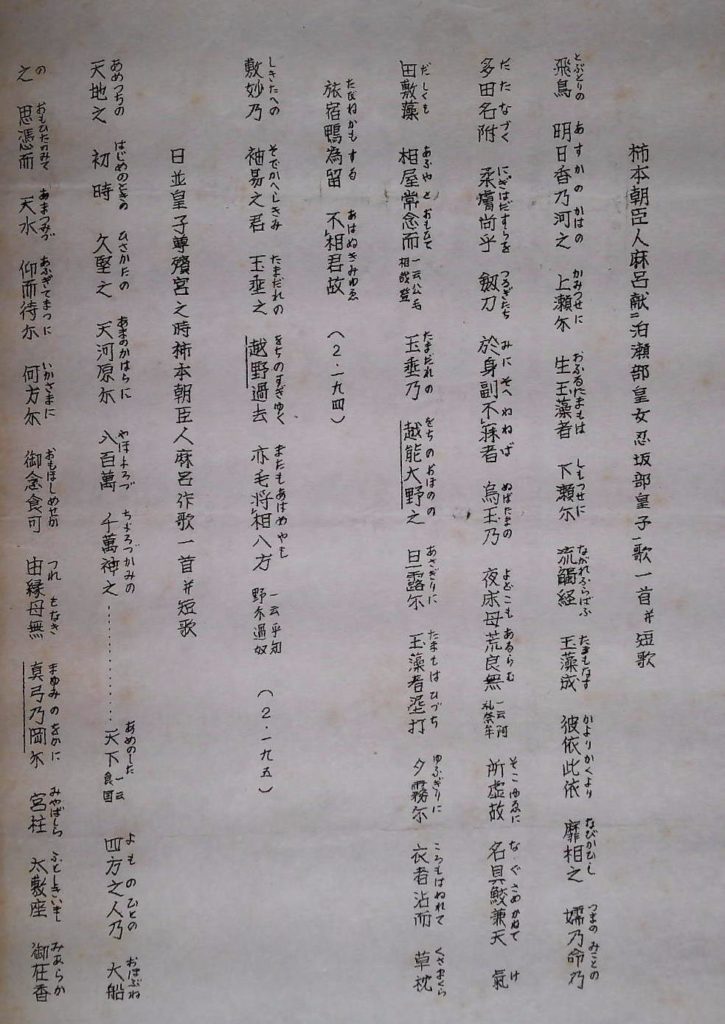 |
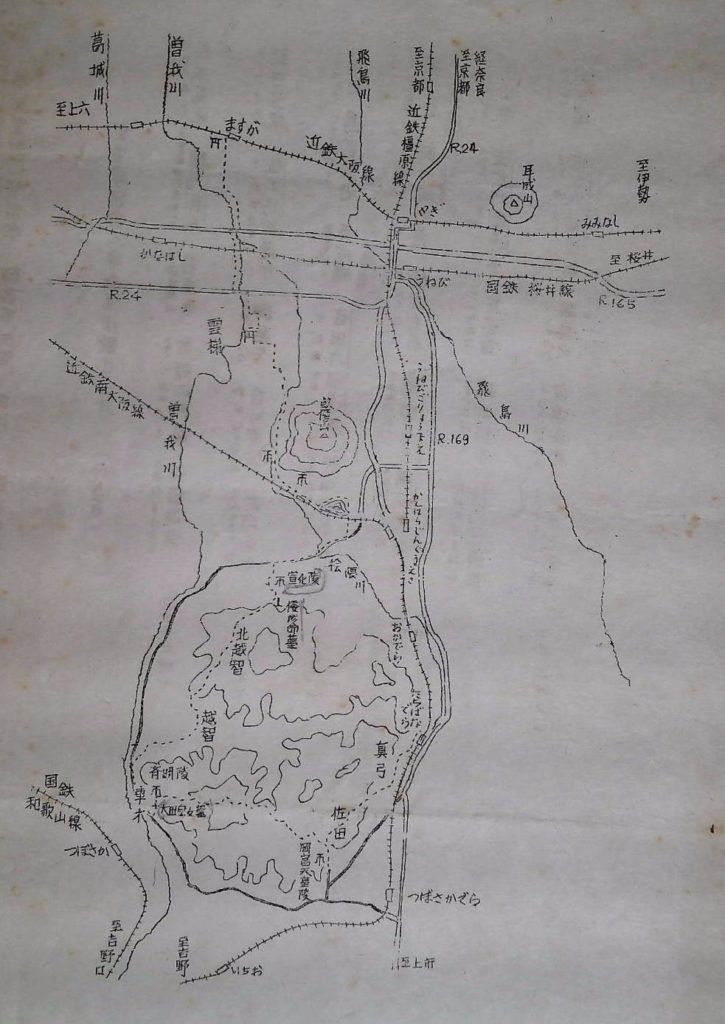 |
止
平城宮跡保存の呼びかけ(1967年9月12日)
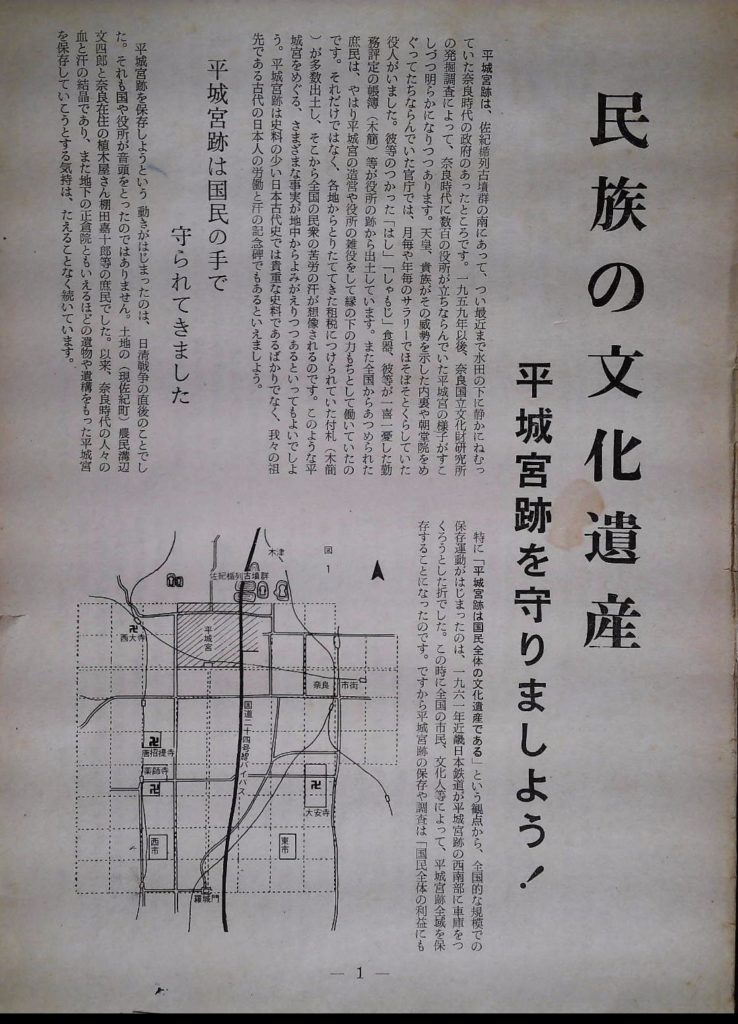 |
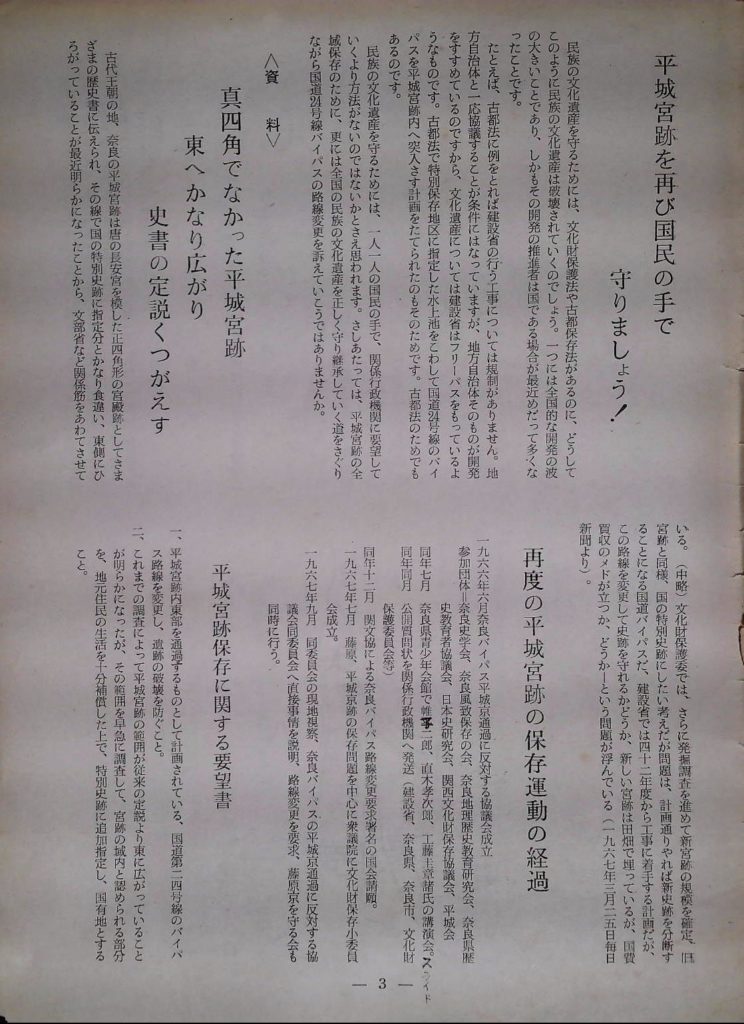 |
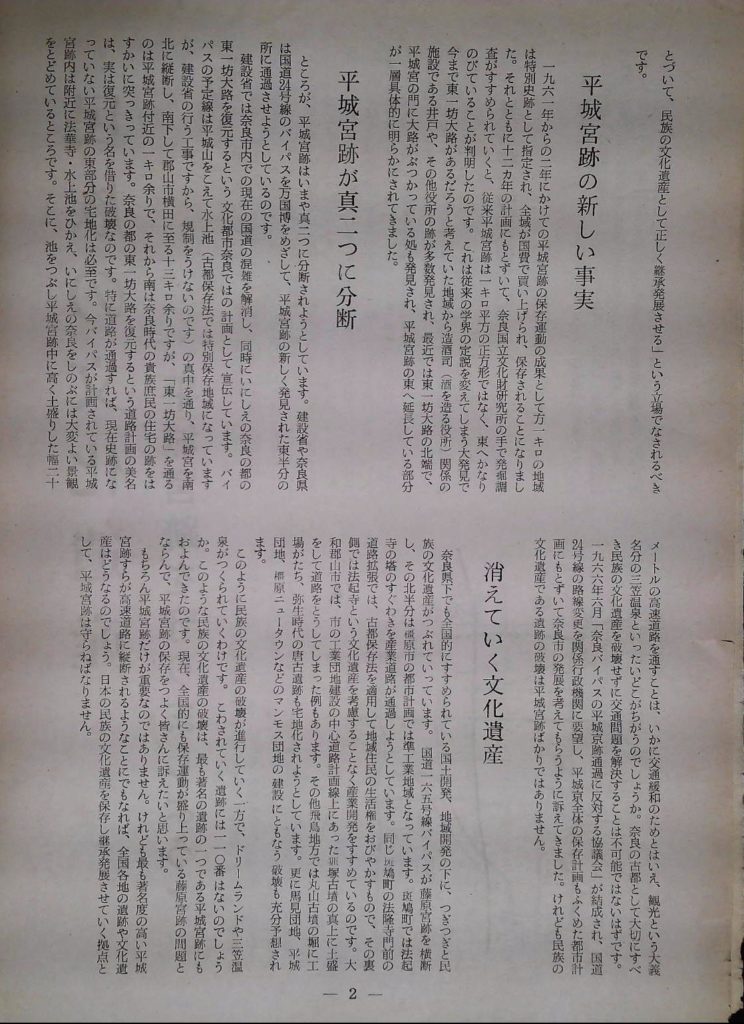 |
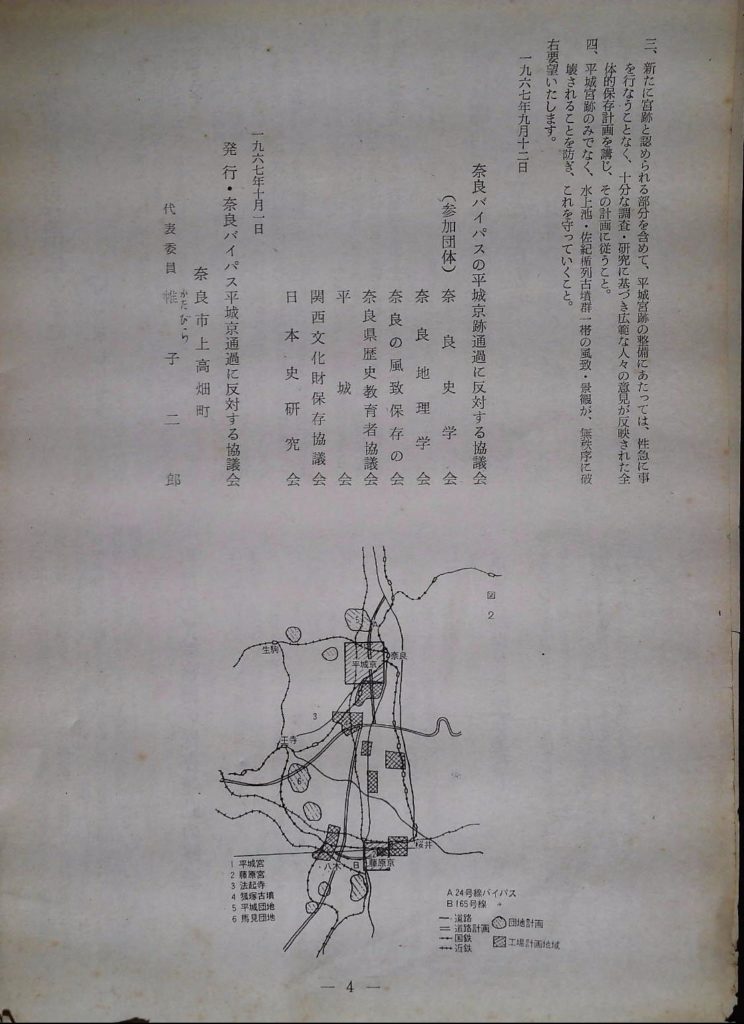 |
止
資料:学生運動<作業中>
| 年月日 | 資料名 | 著者・発行所など | 備考 |
| 1961 | |||
| 1010 | 戦後学生運動史 | 山中明(青木新書) | |
| 1965 | |||
| 03 | 樹々の緑 ’65 | 京都大学同学会 | |
| 0523 | 第20回河上祭 | 京大河上祭実行委員会 | |
| 1217 | 胎動 創刊号 | 京都大学文学部3組 | |
| 2号(1967.1.15) | |||
| 1966 | |||
| 11 | ′66京大第8回11月祭 | ||
| 1110 | 亜寒帯 創刊号 | 『亜寒帯』同人 | |
| 栄原永遠男 | |||
| 1225 | 早稲田をゆるがした150日―早大闘争の記録 | 編集委員会、現代書房 | |
| 1967 | |||
| 0522 | 第21回河上祭 | 京大河上祭実行委員会 | |
| 1001 | 京都大学自衛官入学反対闘争の記録 1964~1967 | 京都大学五者連絡会議 | |
| 1015 | 樹々のみどり 討議資料特集号 | 京都大学同学会中央機関紙、(発行)中央執行委員会 | |
| アメリカのベトナム侵略反対・佐藤内閣の侵略協力反対・小選挙区制粉砕 10.21全国闘争へ | |||
| 1118 | 京都大学第9回11月祭 | 本部実行委員会 | |
| 1968 | |||
| 0410 | 緑の旗Vol.8(広島大学教養部学友会総合機関紙) | ||
| 0530 | 全学連 その行動と理論 | 大野昭男、講談社 | |
| 0731 | 大谷裕追悼文集 | ||
| 1019 | 京都大学第10回11月祭 | 本部実行委員会 | |
| 1020 | 反逆のバリケード―日大闘争の記録 | 日本大学文理学部闘争委員会書記局編、三一書房 | |
| 1969 | |||
| 0115 | 東大紛争の記録 | 東京大学新聞研究所・東大紛争文書研究会、日本評論社 | |
| 0131 | 増補・反逆のバリケード―日大闘争の記録 | 日本大学文理学部闘争委員会書記局編、三一書房 |
|
| 0410 | 砦の上にわれらの世界を―ドキュメント東大闘争 | 東大闘争全学共闘会議、亜紀書房 | |
| 0415 | レポート 揺れる京大 紛争の序章 | 京大問題記録編纂会編、現代教学社 | |
| 0421 | 反逆への招待 | 京都大学出版会 | |
| 0507 | 討議資料 文学部の民主的変革のために―政府の大学自治破壊攻撃と斗うなかで | 文学研究科大学院生協協議会・文学部全学連支持委員会 | |
| 0513 | 嵐の中に育つわれら―東大闘争の記録 | 日本民主青年同盟東大全学委員会編、日本青年出版社 | |
| 0520 | 東大闘争 その事実と論理 | 井上清、現代評論社 | |
| 0615 | 京大闘争 京大神話の崩壊 | 京大新聞社編・京大全共闘協力、三一書房 | |
| 0615 | 知性の反乱 東大解体まで | 山本義隆、前衛社 | |
| 0720 | 大学政策・大学問題 その資料と解説 | 野村平爾・五十嵐顕・深山正光編、労働旬報社 | |
| 0817 | ザ・ロンゲスト・デー 広大封鎖解除機動隊奮戦記 | 広島県警察機動隊編、日刊労働通信社 | |
| 0910 | 尚志 第64号(「広島大学紛争」) | 尚志 | |
| 1971 | |||
| 0301 | 革命的暴力とは何か? | 全学連中央執行委員会情宣部編、こぶし書房 | |
| 0815 | 入管体制資料集 | 東大法共闘編、亜紀書房 | |
| 1972 | |||
| 1201 | 過激派集団 | 公安資料調査会、 | |
| 1974 | |||
| 0210 | フェニックスの苦闘 60年代末における広島大学学園闘争ノート | 近藤純一 | |
| 0628 | 法政大学新聞縮刷版(1)(1929~1955) | 法政大学新聞学会 | |
| 1976 | |||
| 1030 | 南朝鮮学生闘争史 | 高峻石、社会評論社 | |
| 1982 | |||
| 1025 | 広島県大百科事典下巻(「広島大学学園紛争」執筆:松元寛) | 中国新聞社 | |
| 1990 | |||
| 0427 | 権力にアカンベエ! 京都大学新聞の65年 | 京大新聞史編集委員会編、草思社 | |
| 1994 | |||
| 0825 | 全共闘白書 | 全共闘白書編集委員会、新潮社 | |
止
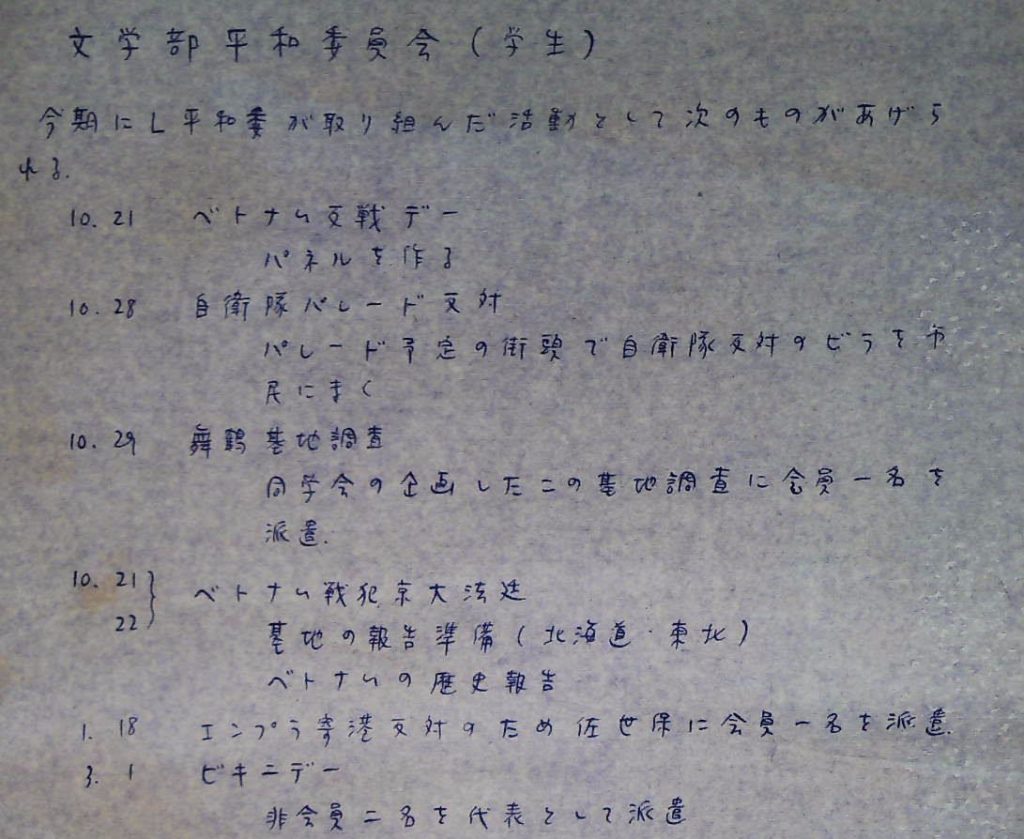
京都大学文学部平和委員会(学生) 会員6名
| 1967年10月~3月 |
 |
止
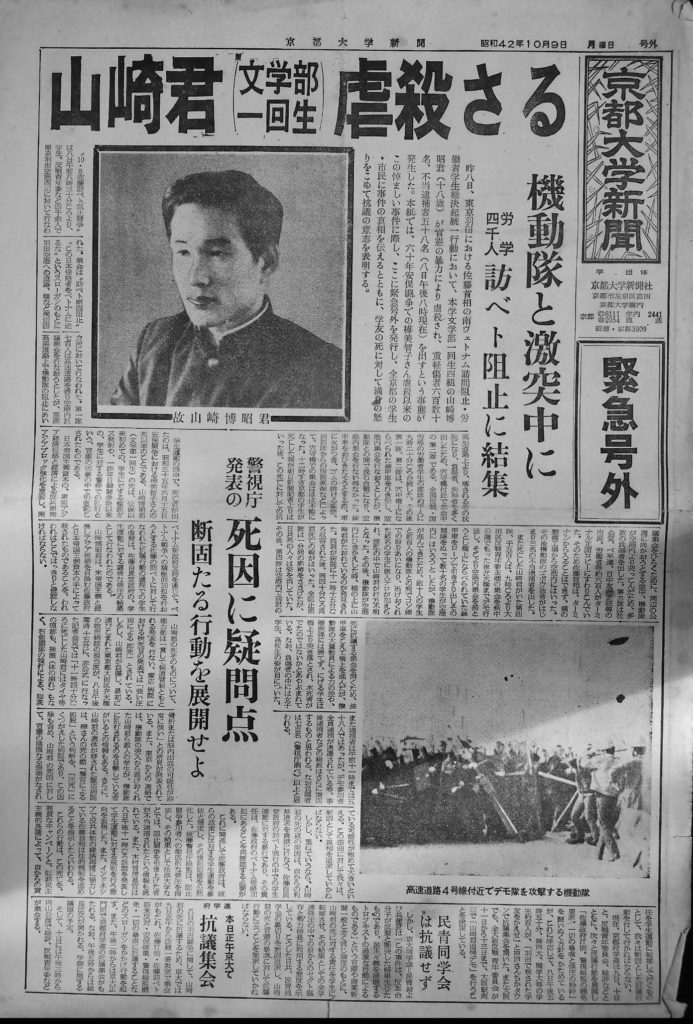
京都大学新聞緊急号外(1967年10月9日)
 |
止
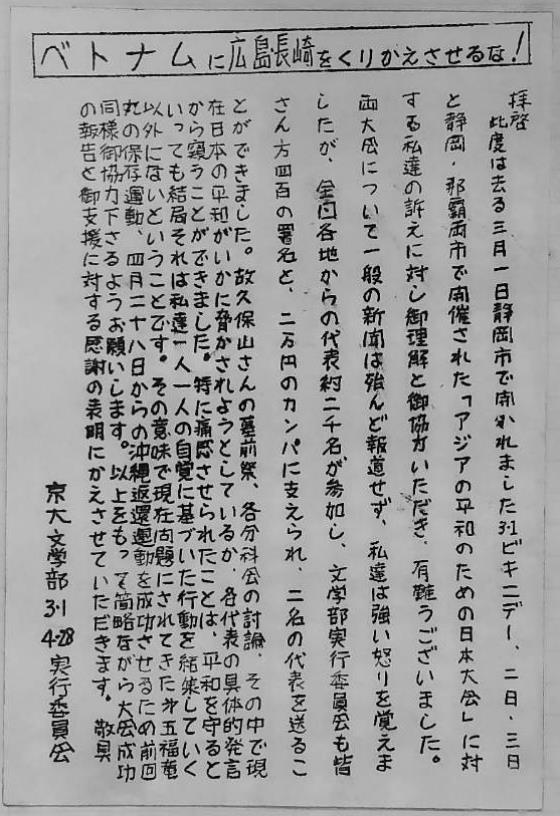
署名・カンパのお礼はがき(京大文学部3・1,4・28実行委員会、196803)
 |
止